SHARED SPACES, SHARED LIVES: ARIANA VAETH’S “EXPANSION PACK” COMES TO CAESTECKER GALLERY
Posted October 14, 2026


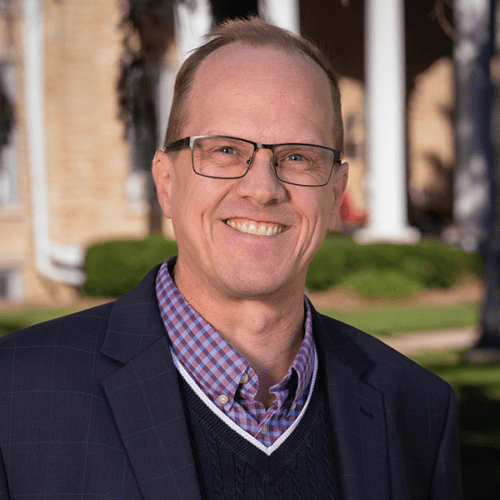
Toby Shucha, assistant professor of music and director of bands and music education, has written a chapter for the recently published book “Methodological Musings: Thinking with Narrative in Music Education Research.”
The chapter, based on this doctoral dissertation, focuses on narrative methodology — or understanding human experience through storytelling.
In his dissertation research, he interviewed 25 people aged 18 to 25 about their experiences with high school band and revisited this research while writing this chapter.
“I noticed a difference in the ways in which participants talked about their experiences,” Shucha said. “That is, a difference in the way that they spoke, gestured and so forth . . . differences that were hard to find in the typed transcriptions. Ultimately, this line of inquiry was what produced the most interesting results, and it wouldn’t have been possible without the narrative methodology.”
Shucha contributed this chapter in response to an open call for chapter proposals from Narrative Inquiry in Music Education (NIME), an organization whose conferences he has attended.
“I realized that I had a story to tell that might help people understand how narrative methodologies can produce powerful results,” Shucha said. “I submitted my proposal, and a few months later I was notified that it made the cut. After the final draft was in, I was excited that my chapter was the first after the editors’ introduction.”
The path to his dissertation work began with research on hazing in high school bands.
“I did a lot of background research on this topic,” Shucha said. “But as I got closer to actual data gathering, it became clear that the Institutional Review Board (IRB) hurdles were going to be significant, mainly because hazing of high school students, even by other high school students, could easily rise to the level of child abuse, which I would be obligated to report to authorities as a mandated reporter — even if the victim didn’t think they were a victim, or want me to report anything.”
He then expanded his topic to explore social induction patterns, focusing on how students either developed or struggled to find a sense of belonging within their high school bands, and the effects this had on their decision to continue or discontinue participating in band.
“I’m excited because I think my findings have implications for helping music teachers keep more students in their programs, and thus help more students get the benefits of music education for a longer period of time,” Shucha said.
He said he hopes the findings will help organizations keep membership.
“The more people see those findings, the more likely it is that they act upon them, or maybe even continue that line of research,” Shucha said. “I want to believe that the work that I do helps to make the world a better place, and getting this published feels like a step in that direction.”
Shucha said the goal of the classes he teaches is to help students become successful music educators. Discussions about student retention frequently arise and those conversations are supported by insights from his research.
He said if someone is interested in either music education or narrative methodology, this book might be of interest to them.
“If there’s something that I hope people take away from this book overall, it’s whatever helps them to help music students — either ideas on how to improve their own teaching, or ideas to help them further music education research,” Shucha said.