


FOLLOW YOUR CURIOSITY
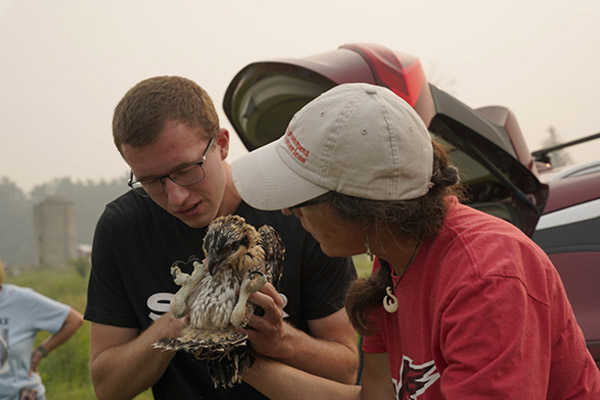
At Ripon, research isn’t just for science majors or graduate school. Students in every field, from chemistry and theatre to psychology and economics, work one-on-one with faculty on real questions. With no graduate students here, the lab bench and the co-author line go to you.
Through our paid Summer Opportunities for Advanced Research (SOAR) program, you’ll spend 400 hours on research or creative work you care about, attend professional development seminars, present your findings to campus leaders and could even get published. Discover where your passions could take you.

1:1
Faculty Mentorship

400
Hours of Research

60%
didn’t have prior research experience
SOAR: GET PAID TO DO RESEARCH THIS SUMMER
Summer Opportunities for Advanced Research (SOAR) pairs you with a faculty mentor for a full summer of research or creative work. Projects span biology, chemistry, psychology, history, physics and more.
You don’t need a résumé full of lab experience to apply. Roughly 60% of SOAR participants have never done research before. What you need is curiosity and a faculty member who shares it.
Every SOAR researcher receives:
- A $3,800 stipend for 400 hours of summer research
- Free on-campus housing
- One-on-one mentorship from a faculty member
- Weekly professional development sessions
- Community projects with fellow researchers
- A poster presentation of their findings at the end of the program
SHARE YOUR WORK WITH THE WORLD
Ripon students don’t just do research. They defend it in front of experts.
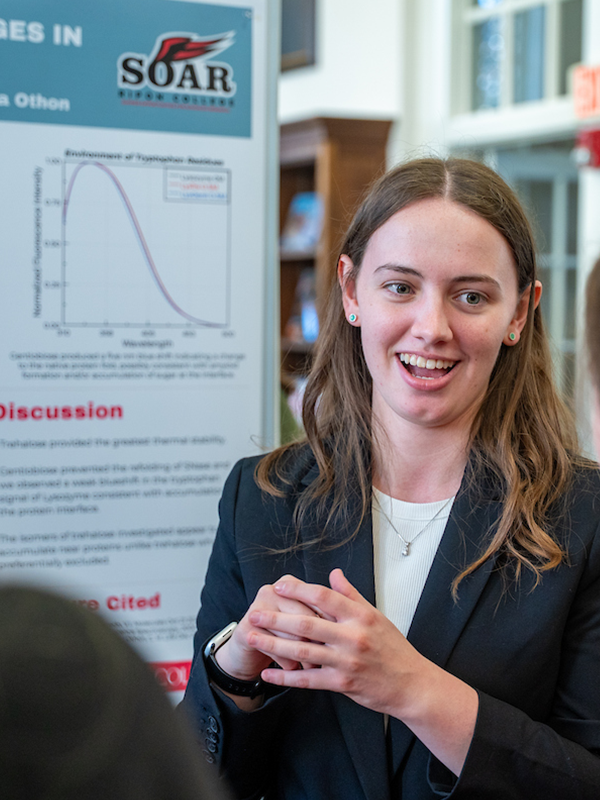
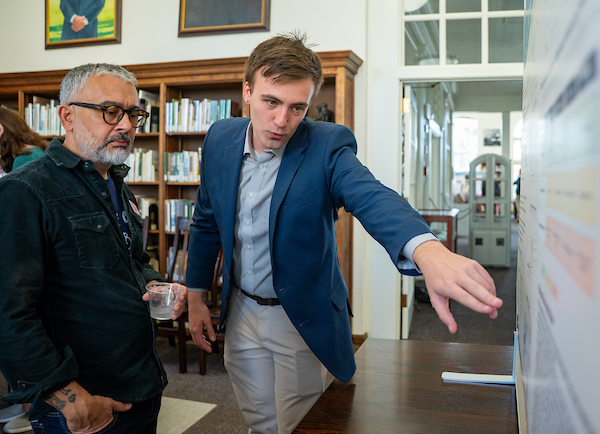
On campus: Students present findings to faculty and peers, including at the end-of-summer SOAR poster session.
At conferences: Students regularly present at regional and national meetings, including the American Chemical Society Great Lakes Regional Meeting, national ACS meetings and multidisciplinary academic conferences.
In print: Close collaboration with faculty often leads to co-authored publications, putting a student’s name on published research before they graduate.
WHERE RESEARCH TAKES YOU
Undergraduate research at Ripon builds the experience that sets graduates apart. Students leave with:
A competitive edge for advanced summer research internships at larger universities
Preparation for graduate programs, where they arrive already knowing how research works
A stronger application to professional programs in medicine, law and other fields
Real accomplishments to point to in job interviews: projects designed, data analyzed, findings presented
A faculty mentor who knows their work well enough to write a detailed recommendation
FIND YOUR QUESTION. FIND YOUR MENTOR.
Ripon faculty bring students into their own active research, in the lab, in the field and in the community. Here’s a sample of what students are working on right now.
Chemistry for a cleaner world. In Professor Colleen Byron’s lab, students study how oxidative stress changes protein structure, track pharmaceutical contamination in wastewater and analyze nutrient runoff in Wisconsin and Minnesota watersheds, using mass spectral and electrochemical methods.
Greener ways to build molecules. Professor Patrick Willoughby’s group develops more sustainable reactions for making the complex molecules behind pharmaceuticals and advanced materials, including methods that use enzymes as catalysts. Students gain experience across organic, analytical and biochemistry, molecular biology and biotechnology.
Molecules no one has made before. In Professor Bryan Nell’s inorganic chemistry lab, students synthesize brand-new molecules, combine them with transition metals to form new metal complexes and explore how they behave.
Genes and viruses. Professor Mark Kainz’s students investigate how bacteria regulate gene expression and how viruses with RNA genomes replicate.
Where biology meets engineering. Professor Robert Wallace and Ripon’s engineering faculty are studying how tiny invertebrates withstand attacks from predators about ten times their size. The work has implications for architecture, fluid dynamics and tool design.
The physics of the very fast and very small. Professor Brett Barwick combines electron microscopy with femtosecond lasers to watch nanoscale events unfold on ultrafast time scales, probing fundamental questions in quantum mechanics.
Modeling the brain. Professor Erin Munro Krull works in computational neuroscience, blending mathematical modeling and data science to study how signals travel along branching axons and how fast brain oscillations arise in sleep and seizures.
The return of the blimp. Professor Hang Li’s students explore lighter-than-air vehicles, which use far less power than conventional drones and can stay aloft much longer. It’s a wide-open frontier in modern aerial vehicle research.
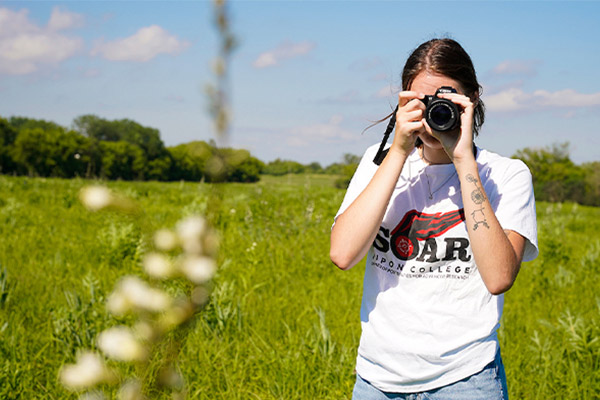
Prairies and pollinators. Faculty-led field projects take students into Wisconsin’s tallgrass prairies to study regional ecosystems and the insect pollinators that sustain them.
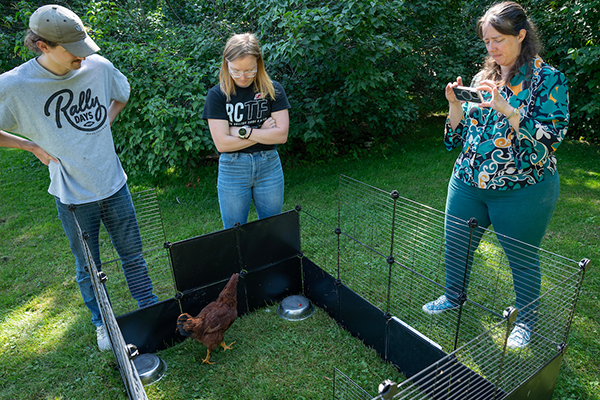
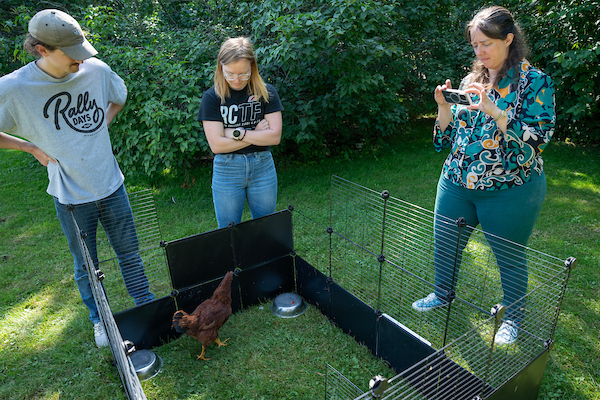
How animals think and feel. In Professor Julia Manor’s Animal Behavior and Cognition Lab, students design and run their own studies with animals from chickens and horses to cats and dogs.
Empathy, emotion and dogs. Professor Kristine Kovack-Lesh’s lab is testing whether empathy for dogs shapes the emotions of children ages 8 to 13 and college students. Students help measure heart rate variability and code facial expressions from video.
The mental game. Professor Yonatan Sarig studies how psychological skills like self-talk affect athletic performance, anxiety and confidence, using tools such as eye-tracking and biofeedback.
The economics of sports. Professor Jiahang Zhang’s students work with real-world data on player pay, performance and decision-making to see how incentives shape professional sports.
Stories that drive civic life. Professor Jackie Clark’s students conduct in-depth interviews, with photography, on two projects: people’s experiences of Hurricane Helene, and how women of different generations turn anger and joy into civic engagement.
Confronting history through genealogy. Professor Marc Eaton studies “reparative genealogy,” in which people who trace their family to American slavery take action to repair that harm, from building relationships with descendants to creating truth-telling art.
Behind the curtain. Theatre students work on productions all year. Professor John Dalziel often hires students for his summer projects, and the department connects students with local theatres and with Starling Shakespeare Company, which Ripon hosts each summer.
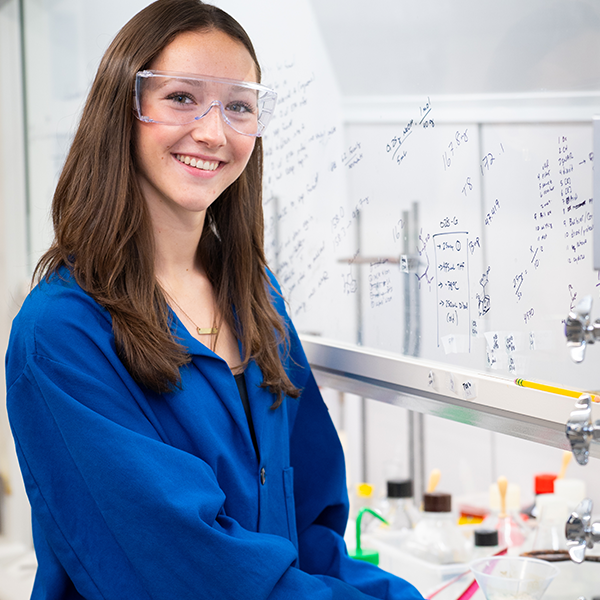
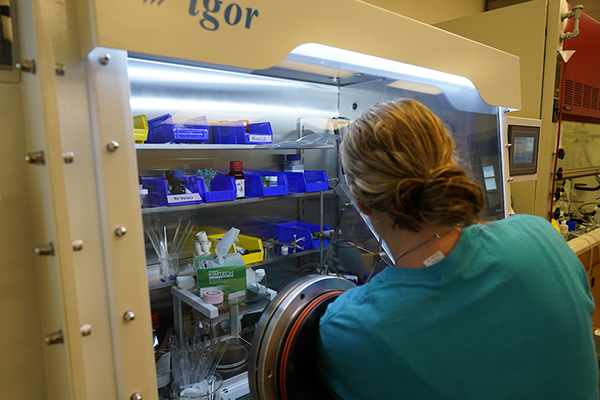
Sophomore Tatum Packard of Moab, Utah, spent her summer in the Franzen Science Center labs working to synthesize Waltherione C, a natural compound from the Papua New Guinea plant Melochia odorata that shows promising anti-HIV activity. While the synthesis didn’t yield a usable therapeutic, the experience moved her closer to her goal of medical school.
“This research opportunity was the first concrete experience I could truly call my own,” she says. “I am grateful to Dr. [Patrick] Willoughby for choosing me to work in his lab and for giving me the opportunity to take this important step toward medicine.”
Tatum Packard ’29
Two summers in the SOAR program have helped me prepare for graduate school by teaching me many skills that I will need and by providing experience that many graduate schools are looking for.
Natalie Davies ’24
Biology Major, Communication Minor
I got a real sense of what doing ethnographic fieldwork is like for professional anthropologists and learned how to work on a project that went beyond the classroom.
Gemma Koester-Jess ’23
Anthropology and History Majors, Museum Studies Minor
I wanted to gain valuable research experience for medical school and to see if I wanted to change career paths and focus on a career in research. I learned so many lab techniques under the guidance of Dr. Sisson.
Inesha Wiseman ’23
Biology Major, Theatre Minor
Want to participate in the SOAR program?
FAQ
If you are passionate about engaging in advanced techniques or developments in your field of interest, SOAR is for you. You will learn the skills necessary to grow as a scholar and gain in-depth experience.
Not at all! Science majors can find great research opportunities through SOAR, but so can many other students. The program has supported successful projects in anthropology, history, mathematics, museum studies, philosophy, psychology and other fields. If there’s an area of study you’d like to pursue through SOAR, complete the form (once available) and we’ll try to accommodate your interests.
You will earn a stipend of $3,800 as a SOAR participant.
You will need to complete 400 hours over the summer months—between the end of Commencement Weekend and the start of Matriculation Convocation Weekend.
Yes! As a SOAR participant, you will qualify for free on-campus housing. See payment information for additional details.
Applications for the summer SOAR program are due in spring.
Check out these past projects Ripon students have completed through SOAR.
Anthropology
- “#HerQuarter: ‘Pocket Monuments’ and the Depiction of Women on U.S. Coinage” | Gemma Koester-Jess ’23 and Ursula Dalinghaus
Biology
- “Floral preference and tongue length in bumble bee species: categorizing floral species and corolla tube length” | Lily Lustig ’23 and Benjamin R. Grady
- “Factors affecting the presence of federally endangered pollinator species on Wisconsin prairies” | Julia R. Scharinger ’23 and Benjamin R. Grady
- “Wren Guards Obstruct House Wren Nest Destruction Behavior” | Zach Rowling ’24, Natalie Davies ’24 and Memuna Khan
- “Something Fishy: Rho kinase 2 expression patterns and craniofacial cartilage development in zebrafish embryos” | Ofome Omosotome ’23 and Barbara Sisson
- “The Interactions of fzd7a, fzd7b, and gpc4” | Inesha Wiseman ’23 and Barbara Sisson
- “Comparison of Colony Formation in Two Sessile Rotifers” | Natalie Davies ’24, Alex LaFleur ’24 and Bob Wallace
- “Preliminary report: The effect of litter composition, sex and order of encounter on juvenile play behavior in rats” | Peter J. Stanfield ’23, Anna P. Meixensperger ’24 and Robin M. Forbes-Lorman
Chemistry
- “Synthesis of 4-Quinolones from Benzyne en Route to the Synthesis of the Waltherione C” | Jacob J. Abraham ’25 and Patrick H. Willoughby
- “Evaluation of sp-Relay Substrates for the Rapid Generation of Molecular Complexity” | Kyle R. Koss ’25 and Patrick H. Willoughby
- “Determining Chemical Runoff Contamination in Ripon Area Waterways” | Roberth U. Flores ’24, Than Thar Su ’25 and Colleen M. Byron
- “Efforts Toward the Synthesis of the Waltherione C Using the Hexadehydro-Diels–Alder Reaction” | Jacob J. Oppeneer ’24 and Patrick H. Willoughby
Chemistry-Biology
- “Optimizing Immunohistochemistry in the Rat Brain” | Anna Meixensperger ’24 and Robin Forbes-Lorman
Exercise Science
- “Effects of quadricep dominant versus functional training programs on functional movements and motor unit recruitment” | Tamera M. Holland ’23, Larissa L. Rowley ’23 and Brittany N. Followay
- “Effects of a quadricep dominant versus functional training program on balance, activities of daily living, and motor unit recruitment” | Larissa L. Rowley ’23, Tamera M. Holland ’23 and Brittany N. Followay
History
- “Rethinking Liberal Arts Education at Ripon College in the Nineteenth and Early Twentieth Century” | Olivia Robinson ’24 and Brian Bockelmann
Physics
- “Stabilization of Proteins Against Thermal Denaturation” | Benjamin Hildebrand ’24 and Christina Othon
Political Science
- “Outside Money in New York City and Los Angeles: Can City Council Elections Be Bought?” | Aaron M. O’Halloran ’24 and Henrik M. Schatzinger
Psychology
- “A Helping Paw: Factors Influencing Empathy-like Behaviors” | Olivia R. Mandel ’22 and Julia E. Meyers-Manor
REQUEST MORE INFORMATION
Contacting a program advisor or current SOAR student is a great way to learn more about the experience. You can also complete an application or interest form.
SOAR Program Advisors
Julia Meyers-Manor
Associate Professor of Psychology
[email protected] | Faculty page
Patrick Willoughby
Associate Professor of Chemistry
[email protected] | Faculty page

DO MORE YOUR WAY
Become the extraordinary individual you are meant to be at Ripon.