Lori Stich
Posted September 28, 2026


Class of 1978: Recalculating and Resilience
Helen Holter came to Ripon College with an interest in Russian language and the Soviet Union, which she parlayed into international travel and work as an Emmy Award-winning journalist, hoping to improve an ever-changing world by addressing and illuminating issues.
She was born March 19, 1956, in Billings, Montana, granddaughter of itinerant cowboys and Norwegian homesteaders. After living in rural Turkey as a high school exchange student, she began to see the world through different lenses and languages, and through different cultural and national perspectives.
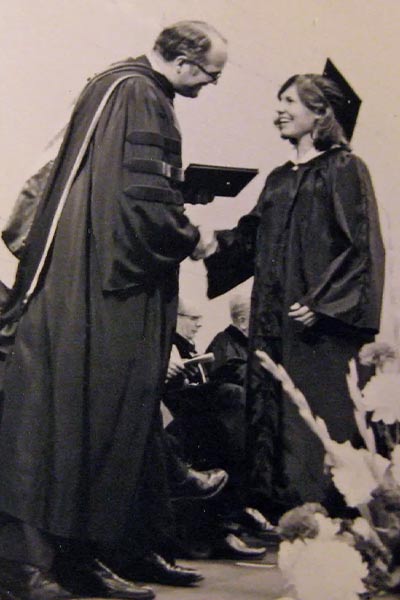 At Ripon, she majored in Russian language and Soviet studies, and participated in WRPN radio, Readers’ Theatre, music, Parallax and Phi Beta Kappa, and was a student representative to the Alumni Board. She received a master’s degree in Slavic languages and linguistics with an emphasis on Russian and Serbo-Croatian, and later earned a second bachelor’s degree in communications/broadcast journalism.
For her work in television, Holter has received an Emmy Award for her medical/health show “HealthSmart,” team Emmys for newscasts and documentaries, and awards from the Society of Professional Journalists and Best in the West. A highlight was her interview in Russian with the Siberian Seven, a Pentecostal group of Russians persecuted for their religious beliefs who emigrated to the Seattle area, and for which Holter received a National Council of Christians and Jews award.
In 1990, Holter received the Alderdinck Foundation Award from The Hague, The Netherlands, to report in Russian as a senior TV news correspondent for Soviet television, with viewing audiences of 30-70 million. She reported from Moscow and Kyiv, Ukraine, was the first Western TV journalist to interview Uzbekistan’s dictator/president and among the first Western TV journalists to report from Chernobyl after the nuclear disaster.
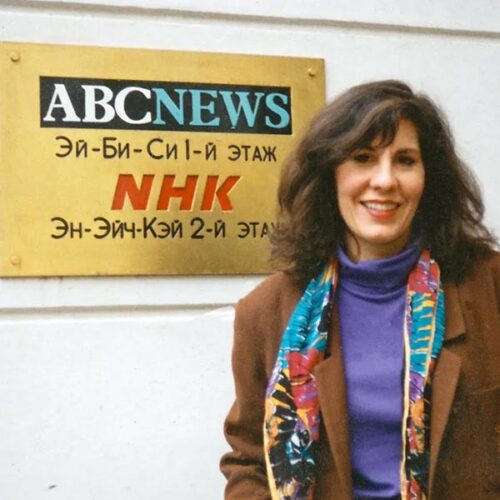
For ABC News-Moscow, Holter witnessed and reported on some of the most monumental moments of the 1990s: the first Clinton-Yeltsin summit, first democratic elections in Russia, the rise of ultra-conservative Communist Vladimir Zhirinovsky, bombings of Jewish synagogues, and Russian mafia shootouts in the streets of Moscow.
After returning to Seattle, Holter pivoted again toward emerging digital media and technology, working at startups, Microsoft, and in her own business. She was invited to speak at a groundbreaking “New Media for a New World” conference in Moscow, helping train top Russian journalists in new digital reporting technologies, and she was named top presenter at that conference. Later, Holter’s work pivoted into creating videos and stories on Siberia, Russia, South Caucasus, Turkey, Balkans, and Central Asia.
For more than 15 years, Holter served on the board of the Seattle-Tashkent Sister City Association, a pioneering relationship between the United States and Uzbekistan in Central Asia.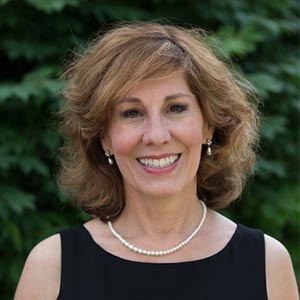
Holter received a Distinguished Alumni Citation from Ripon College in 2013. “Ripon was never just about a set of information that you memorized,” she said. “We were taught to be resilient. I can truly trace all of (my success) back to Ripon.
“Everything in my life — everything — originates from my parents’ drive and desire to have us — their children — educated. They both grew up on 160-acre homesteads in the middle of nowhere in Montana, with no indoor plumbing or water, and no electricity. My mother studied by candlelight; by age 19 she had finished college and was teaching in a one-room schoolhouse in Montana. I know that my landing at Ripon College was the highest achievement possible in my parents’ eyes.”