Lori Stich
Posted September 28, 2026


Economics
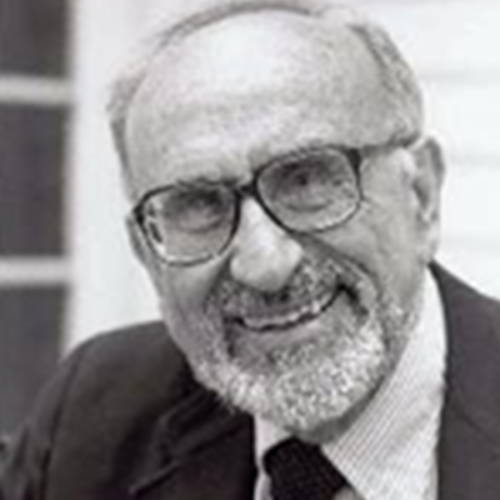
Widely heralded as one of the most important economists of 20th-century America, Alfred E. Kahn was a political advisor who specialized in regulation and deregulation and is best known as the chief architect and promoter of deregulating the nation’s airlines and public utilities.
He began his academic career as an assistant professor at Ripon College and served as chairman of the Department of Economics from 1945 to 1947.
Khan was born Oct. 17, 1917, in Paterson, New Jersey. He earned bachelor’s and master’s degrees from New York University and a doctorate in economics from Yale University after graduate study at New York University and the University of Missouri.
Early in his career, he worked for policy research organizations and government agencies in Washington, including the Brookings Institution, the antitrust division of the Justice Department and the War Production Board. During World War II, he served as an Army economist for the Commission on Palestine Surveys.
After Ripon, he joined the economics faculty at Cornell University in 1947, remaining for the bulk of his career and serving as dean of the College of Arts and Sciences from 1969 to 1974.
In 1970, he wrote “The Economics of Regulation,” a study of government controls of private industry and the pre-eminent work in the field. In 1974, he took a six-year leave from the university to become chairman of the New York Public Service Commission, which oversaw regulation of electric, gas, telephone and water companies.
Later, as chairman of the Civil Aeronautics Board during the Carter administration, he led the move to pass the Airline Deregulation Act of 1978, the first thorough dismantling of a comprehensive system of government control since 1935.
The deregulation resulted in increased competition, dramatic drops in airline fares and a boom in air travel, and also paved the way for low-cost carriers to emerge. But it also created severe financial struggles for the airline industry.
From 1978 to 1980, he served as Advisor to the President on Inflation under Jimmy Carter, and chairman of the Council on Wage and Price Stability. As Carter’s “inflation czar,” he worked to curb rising costs in food, medical care and energy. He was also a key influence toward freer pricing controls in rail and automotive transportation, telecommunications, utilities and the securities markets.
In 1980, he returned Cornell. He wrote more than 130 academic papers and eight books. He also was one of the profiles in “Prophets of Regulation: Charles Francis Adams, Louis D. Brandeis, James M. Landis, Alfred E. Kahn,” by Thomas K. McGraw, who won the 1986 Pulitzer Prize for history for the book.
In both academia and the political world, he was well-known for his charming witticisms and was called a “wisecracking economist from Cornell University” by Alan Greenspan. “I’m a very good actor,” he said. “I’ve acted all my life. I loved to explain things. I regarded reporters as students in a graduate seminar. Explaining economics to the press made them my students for life. … I had the perfect background and a lifelong belief in plain English — in addition to which I’m a ham.”
When he was criticized for using the alarming word “depression” in the face of inflation, he switched to the euphemism “banana” – until those in the banana industry objected and he then used the word “kumquat.”
“I never felt I knew all the answers, but believed in experimental trying and following my instincts,” he said.
He received an honorary degree from Ripon in 1980.
He died Dec. 27, 2010, at age 93.