Lori Stich
Posted September 28, 2026


Biology
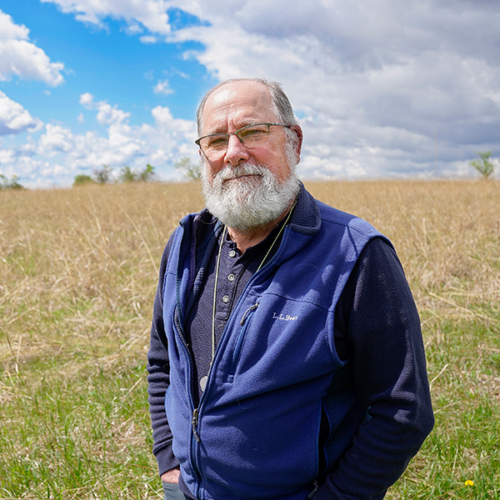
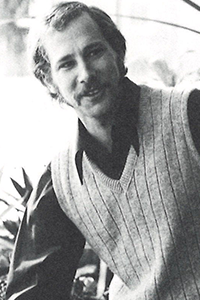
George “Skip” H. Wittler, professor emeritus of biology, served Ripon College as a professor for 41 years and continues working with the Ceresco Prairie Conservancy.
He was born Jan. 29, 1948, in New York City. He received a bachelor’s degree in biology from Carleton College, his master’s in botany from the University of Montana-Missoula and his doctorate from the University of Texas-Austin. He joined the Ripon faculty in 1975.
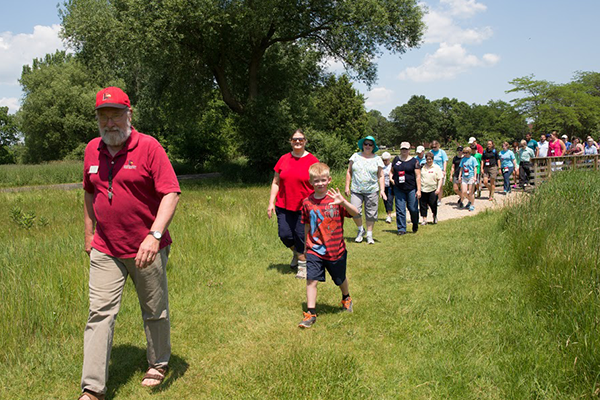
In addition to teaching, Wittler, whose main fields of study were plant anatomy and ecology, served as chair of the Department of Biology for 16 years; worked extensively with students in Ripon’s greenhouse; was coordinator of the Environmental Studies major; directed the Associated Colleges of the Midwest (ACM) Wilderness Field Station in the Superior National Forest of Minnesota for several years; led numerous Maymester trips to the desert and beyond; and helped establish the Ceresco Prairie Conservancy, a joint effort by Ripon College and the Department of Natural Resources (DNR), for which he has served as director for decades and given countless walking tours.
 The Conservancy, 130 acres of land at the west end of the campus, is a prairie restoration project that serves to “provide a living outdoor lab for students,” Wittler said. “There’s a spiritual aspect to the prairie. It’s more than just plants and animals — it’s humans, too.”
He received Ripon’s James R. Underkofler Award for Excellence in Undergraduate Teaching in 1999 and was a two-time recipient of the May Bumby Severy, Class of 1908, Award for outstanding teaching. He retired in 2018 as the William Harley Barber Distinguished Professor of Biology.
He also was named Educator of the Year from the Wisconsin Association for Environmental Education.
“Skip Wittler’s enthusiasm for various forms of plants helped me realize there is more to biology than human and animal anatomy and physiology,” said Kathy Allen, Class of 1982, who later worked as a health physicist at Illinois Department of Nuclear Safety.
Bill Ainslie, Class of 1979, said: “Skip is truly in his element in the field. My experience with Skip at the field station set me on the track of field biology/ecology … in my career as a wetland scientist with the federal government. After an undergraduate degree, a master’s degree and additional coursework, I have never encountered as gifted and dedicated an educator as Skip.”
 About Wittler’s enduring influence Meghann Morrissey Jarchow, Class of 2003, said: “The courses that I took with Dr. Wittler that involved the Ceresco Prairie developed my love of prairie, which continues to this day. I received my Ph.D. in prairie plant ecology (the degrees were sustainable agriculture and ecology and evolutionary biology – but my focus was on using prairie plants for bioenergy), and I continue to do research on prairie. …
“The combination of Dr. Wittler’s deep love for prairie and the community-based learning that we were able to do at the Ceresco Prairie and at other locations have been extremely influential on my life.”
Within the community of Ripon, Wittler has served on the South Woods Park Association Board of Directors. Including three terms as president; and he has led the South Woods Spring Walk, conducts nature study activities with area youths and served on the advisory board of the Riggs County Park restoration project.
He also has served on the Ripon Township Plan Commission for more than 15 years and served as chair for several years.
His wife is Michele A. Baran Wittler, Class of 1976, retired associate dean of faculty, registrar, and Title IX coordinator.