Lori Stich
Posted September 28, 2026


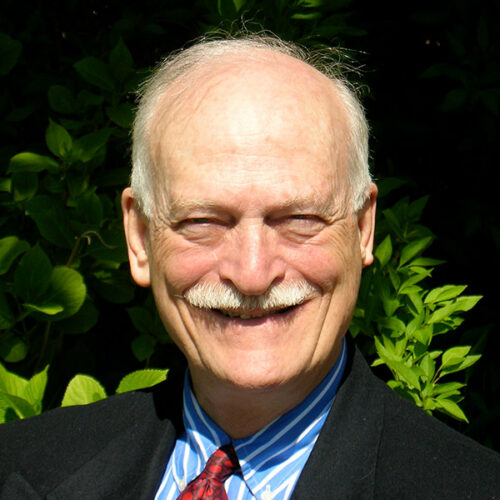
Class of 1958: International economist
Richard Duane Bartel had a 50-year career as an economist with a focus on international economic policy.
He was born Jan. 5, 1936, and came from Neenah, Wisconsin. At Ripon, he studied mathematics. He continued graduate studies at the University of Vienna, Austria. That environment, at a time when Austria was occupied by Russians, brought him into touch with the aftermath of the Hitler period, he said.
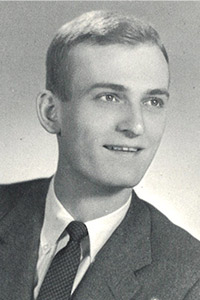 He earned master’s and Ph.D. degrees in economics from Columbia University in New York.
He worked with the Federal Reserve of New York and the Bank for International Settlements in Basel, Switzerland, an international institution owned and run by the heads of the central banks of major western countries. This led to his appointment by Sen. Jacob Javits (R,NY) as an economist to the Joint Economic Committee of the U.S. Congress.
After returning to New York in 1980, he became executive editor of “Challenge, the Magazine of Economic Affairs.” “It was an unusually exciting 15 years,” he said, “since my editorial board included many U.S. Nobel Prize winners – Paul Samuelson, Jim Tobin, Larry Klein, among others – and my editorial work for ‘Challenge’ and scholarly books ranged across the broad spectrum of economic policy issues.
“It was great fun going to the White House to interview the key economic advisers in both Democratic and Republican administrations,” Bartel said.
He also traveled to Europe frequently where he worked with German Chancellor Willy Brandt and Austrian Chancellor Bruno Kreisky on the North-South Dialogue.
His publications included the book “The Challenge of Economics: Readings from Challenge” (1984).
After retiring in 1996, he entered the two-year training program of the Lutheran Deaconate on Long Island and began a prison ministry.
He also delved into the ideas of egalitarian justice, reason, knowledge and truth to centralize power and give everyone an equal chance. He examined and translated various versions of the Bible, other religious texts and religious artworks that express justice.
“My teenage adventure as an American Field Service student in Vienna, Austria, still under Soviet military occupation in 1953, made me ever sensitive to the issues of freedom, justice and democracy,” he said. “My own career made me increasingly aware of the problems of injustice and concentrated power in the American system.”
More than 50 years ago at Ripon, Bartel said, he learned from his teachers how the liberal arts led the search for truth and justice. “Ripon is a liberal arts college in the tradition of the United States, but the idea of liberal arts comes from the ancient Greeks, to the ancient Hebrews and Egyptians. Wisdom and search for truth is an understanding of the liberal arts.”