Lori Stich
Posted September 28, 2026


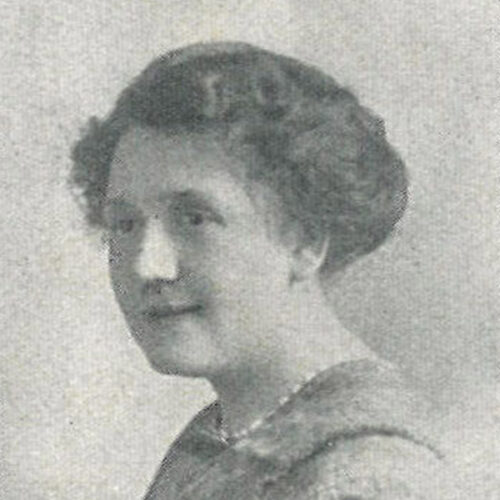
Class of 1915: Celebrity chef
Long before Julia Child, television talk shows and cooking programs, Jessie Marie DeBoth was a household name across the United States and Canada as a cooking star and home economist.
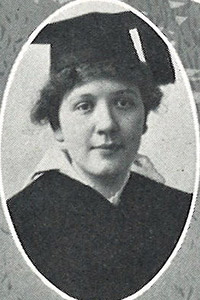
She was born Oct. 20, 1890, in Appleton, Wisconsin, then moved to Green Bay. At Ripon, she majored in English and participated in League, serving a term as president. After Ripon, she did graduate work at the University of Wisconsin and Northwestern University. She taught high school English and science in Westfield, Wisconsin, then she moved with her parents to Chicago in 1927. She quickly established herself as a cooking consultant and advisor on household management.
Her wildly popular column in the Chicago Daily Tribune, “Jessie’s Notebook,” was widely syndicated. That led her to originate a cooking school, sponsored by newspapers that carried her column. The DeBoth Homemakers Schools were four-day extravaganzas of lectures and demonstrations about nutrition, food preparation, menu planning, budgeting, interior design and helpful cleaning and laundry tips — everything “except how to wind the clock and put the cat out,” DeBoth said. They included audience participation, humor, prize giveaways, entertainment and product promotions.
With her 6-foot height, bouncing personality and flamboyant entertainment style, DeBoth, beautifully dressed in fashionable outfits, entered the stage waving a sifter and calling out, “Yo ho!”
Thousands of men and women attended each show. In Detroit, the early shows were offered free of charge, but thousands had to be turned away, so admission was charged at 30 or 40 cents. Still, lines four abreast stretched for 2½ blocks around the Detroit Masonic Temple.
 In 1940, Life magazine declared “…she is the best-known and best-paid cooking impresario in the country. She travels thousands of miles, writes millions of words, lectures, broadcasts, ballyhoos — all to the greater glory and increased sales of the food manufacturers whose products she plugs.”
In the 1940s, she had a similar radio program, and in the 1950s, she had the “Jessie’s TV Notebook” television program. She was the author of 35 cookbooks and the “Modern Household Encyclopedia.”
“My field has been that of food advertising and I have gained recognition through the large cooking schools which I have conducted throughout the country,” she told Ripon College. “In that field, I have established a record of addressing larger audiences and a greater total number of women than any other woman – something over 10,000,000. In one of the Chicago Daily News Schools …. I had an audience in excess of 25,000 at one time.
“When the war brought my cooking schools to an end, I established a newspaper column, which appears weekly in 68 metropolitan newspapers, with a total circulation of 14,700,000.”
Through the years of her career, she remained a proudly single independent woman, but wrote in her 1929 cookbook about the importance of so-called “women’s work” and that the U.S. census had finally started listing housewives as homemakers instead of as unemployed. “This is real progress,” she wrote.
She received Ripon’s Distinguished Alumni Citation in 1947.
In her 60s, she married Carl Ebbe Dreutzer on July 16, 1954. They both were lecturers to the Chautauqua Circuit. Dreutzer was a retired attorney and adventurer. He had been a gold miner, explorer and big game hunter. He was commissioned by the Brookfield Zoo to capture a young walrus and brought back three from Cape Prince of Wales in the Arctic Ocean. They were transported to Chicago by plane, ship and train. They were the only live walruses in captivity in the world at that time.
DeBoth Dreutzer died Aug, 30, 1959, at age 68.
Her brother, Ward DeBoth, also had studied at Ripon College. He did college preparatory work in 1905 and was a football star. He later became a well-respected physician in Green Bay. During the Spanish flu pandemic of 1918, he contracted the disease after caring for patients and died Oct. 10, 1918.