Lori Stich
Posted September 28, 2026


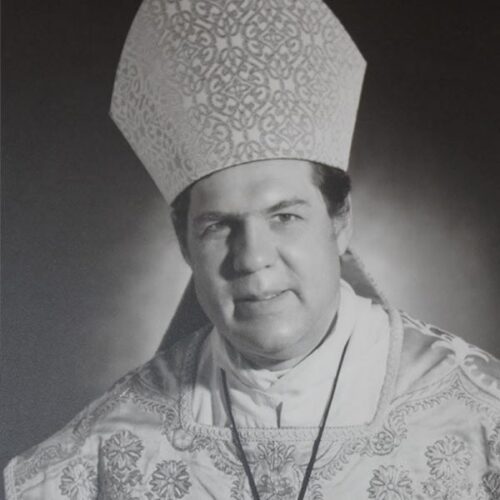
Class of 1958: Bishop of Pretoria
From foundational studies at Ripon College to standing up against the apartheid government in South Africa, the Right Rev. Richard Austin Kraft was led by a call to Christian service.
He was born June 3, 1936, in Chicago, Illinois. At Ripon, he majored in philosophy and history, was a member of The Scribbler and Sigma Chi and was chair of the religious committee. He completed his master’s of sacred theology at General Theological Seminary in New York and was ordained in 1961.
 His wife, Phyllis Schaffer Kraft, Class of 1958, was born Feb. 27, 1937, and majored in English and history at Ripon. The Krafts accepted a call to serve the Anglican (Episcopal) Church as missionaries in South Africa during the heat of apartheid.
After arriving in September 1961, Kraft worked toward desegregation and frequently defied the national government by opening private schools in his charge to all races and ministering to people in areas he was forbidden.
Alongside his wife, he worked relentlessly toward the betterment of race relations. She also worked for the church and was a teacher.
Kraft’s various positions included assistant priest at St. Alphege Church in Pietermaritzberg; rector of St. Chad’s Mission, Klip River; director of Christian education in the Diocese of Zululand; and rector of All Saints Parish, Melmoth, KwaZulu-Natal.
In 1976, he was appointed director of the education department of the Church of the Province of South Africa and then Dean of Pretoria. He served as Bishop of Pretoria from 1982 to 1998. His nickname, given by the Zulu people of Natal, was Umlungiso, or “The One Who Puts Things Right.”
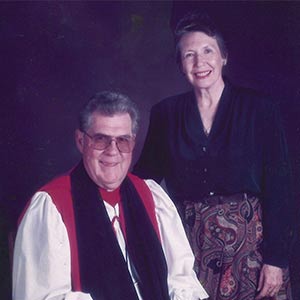
Richard Austin Kraft and Phyllis Schaffer Kraft, both Class of 1958
“What I learned at Ripon helped me to understand the attitudes of the various ethnic groups in South Africa to each other (not always good attitudes),” Phyllis Schaffer Kraft said while they still were serving in South Africa. “The mixture of Portuguese, French, Dutch and British (white) conquerors and settlers and the many groups of indigenous people, plus the slaves brought by the British and Dutch East India Companies, all had reference points in my mind from the teaching of (professors of history Edwin) Eddie Webster and (John) Glaser.
“In a bustling, growing, polyglot, confused city, we often think of the quest homogenous smallness of Ripon. … This ‘bishop thing’ is enormous in terms of its multiplicity of everything – languages, four race types, desert, mountains, and swamps, primitive villages and skyscraping cities. We know that the good Lord will provide what is necessary to do his work here, so long as we’re open to receive it. … The Ripon environment has taught us, above all, how to cope creatively in a constantly changing environment.”
Richard Austin Kraft died Jan. 17, 2001, at the age of 64.