Lori Stich
Posted September 28, 2026


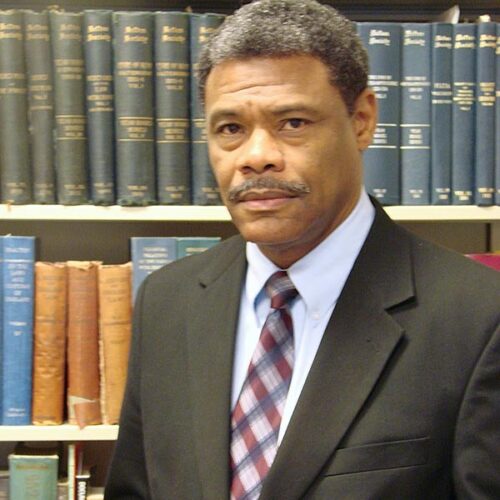
Class of 1969: Medievalist
Ripon College’s multifaceted approach allowed William Chester Jordan to study in numerous areas and ultimately major in history, Russian and mathematics. The determination to become an educator was paramount. “The truth is that the life of the mind that had always intrigued me and appealed to me — the idea of becoming a professor, trying to create new knowledge and impart it to young and supple minds in an academic atmosphere” was appealing, he said.
He was born April 7, 1948, in Chicago, Illinois. At Ripon, he participated in athletics, forensics/debate and Phi Beta Kappa. He received a Ph.D. in history from Princeton University and joined the faculty there the same year. He became the Dayton-Stockton Professor of History and chairman of the History Department.
His interest in the Middle Ages was piqued at Ripon, he told a Princeton interviewer. “It was a small college, and the books in our library tended to be old classics. I read (Belgian historian Henri) Pirenne’s “Mohammed and Charlemagne” (1937), a wonderful book. It had such sweep and boldness. I thought I’d like to have a vocation in which one might try to write something of that quality.”
Jordan is highly regarded in his specialty of medieval studies of the 6th through 14th centuries in Europe and is lauded as among the most admired historians of his generation. He has published extensively on such topics as the reign of Louis IX of France, the Crusades, English constitutional history, gender, economics, Judaism and church-state relations in the 13th and 14th centuries.
His painstaking work involves research from hundreds of sources and archives around the world. “It’s fun to recreate a story from the past, to take many fragments and from them to create a whole,” he said.
 He is the author of more than a dozen books, including “The Great Famine: Northern Europe in the Early Fourteenth Century,” which was awarded the Haskins Medal of the Medieval Academy of America; “Louis IX and the Challenge of the Crusade: A Study in Rulership,” praised as “the most comprehensive secondary source account of the seventh crusade currently available”; “Europe in the High Middle Ages”; “The Apple of his Eye: Converts from Islam in the Reign of Louis IX”; and “Servant of the Crown and Steward of the Church: the Career of Philippe of Cahors.”
At Ripon College, he served as a member of the Board of Trustees from 1999 to 2019. He received the Distinguished Alumni Citation in 1997 and an honorary degree in 2001.
Also presenting Jordan with honorary degrees were Harvard University, Bard College, Catholic University of America and Oxford University.
He was elected a Fellow of the Medieval Academy of America, the American Philosophical Society and the American Academy of Arts and Sciences, and he has served in leadership roles in several prominent and national organizations related to history, medieval studies and the humanities.
In 2024, Jordan was inducted into the American Academy of Sciences and Letters and received its Barry Prize for Distinguished Intellectual Achievement. In January 2025, he received the American Historical Association’s Award for Scholarly Distinction, presented to senior historians for lifetime achievement.
Jordan said he enjoys teaching, doing research and publishing to leave his work for future generations. Dozens of his former Ph.D. students serve as researchers at eminent colleges and universities around the world. “I love what I do, and that’s the bottom line,” he said.