Lori Stich
Posted September 28, 2026


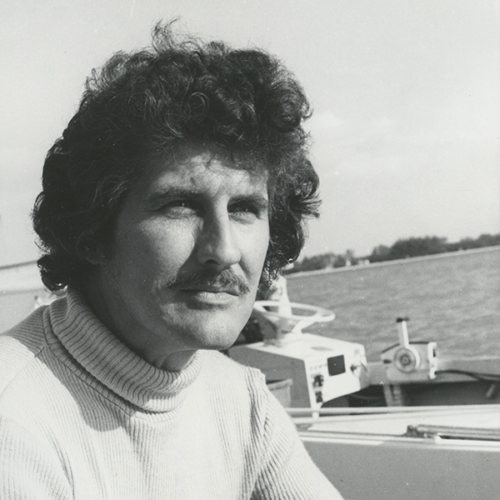
Class of 1954: Animal behavior and the environment
As one of the world’s leading figures in the field of animal bioacoustics, Arthur A. “Buzz” Myrberg Jr. spent his career protecting the marine environment and its wildlife.
He was born June 28, 1933, in Chicago Heights, Illinois. At Ripon, he majored in biology and secondary education. He participated in Omega Sigma Chi, choir, Ver Adest, football, wrestling and track, and he served as business manager of College Days.
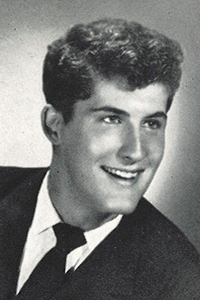 He was commissioned through ROTC and served in the U.S. Army in Korea.
He received a master’s degree in zoology from the University of Chicago and a Ph.D. in zoology from the University of California, Los Angeles.
He spent 40 years as a research scientist and teacher at the Rosenstiel School of Marine and Atmospheric Science at the University of Miami in Florida. He was the principal investigator of federal and international research contracts and grants from the Office of Naval Research, National Science Foundation and the National Institutes of Health, dealing with ethnology, behavioral ecology and bio-acoustics of coral reef fishes and sharks.
As a professor of marine biology and fisheries, his research focused on animal behavior, sound communication and interceptions in marine animals, and the harmful effects of underwater acoustical energy on such animals.
It included stress and its effects on the activities of fishes, functions of sound production by fishes,
effects of man-made acoustical noise on fishes, and social interactions among coral reef fishes.
“I call attention to the problem of noise pollution in the marine environment through scientific publications and reports in environmental magazines and newspapers,” he said. “To address problems and to attempt solving them, often with success.”
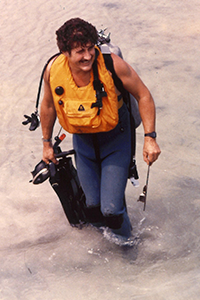 He was a renowned lecturer and presenter at academic and governmental institutions throughout the world, published nearly 100 scientific papers, was listed in Who’s Who in the World, and was a Master Scuba Diver.
Ripon College presented him with its Distinguished Alumni Citation in 1991.
“Ripon College taught me much about the value of serious inquiry and careful work,” he said. “These points were ‘honed’ through my master’s and doctoral studies and then about 28 additional years of scientific study as a marine biologist.”
He died April 8, 2005, at age 71.