Lori Stich
Posted September 28, 2026


Class of 1950: Conservationist
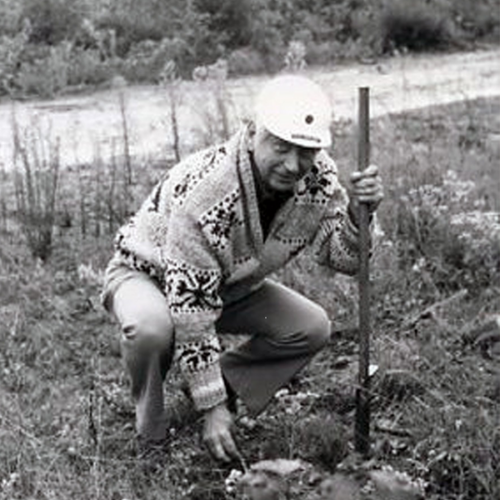
One of Wisconsin’s most recognized and respected conservationists and environmentalists, Daniel Olney Trainer, got an early grounding in his passion in the area around Ripon.
He was born July 13, 1926, in Princeton, Wisconsin. His father, Daniel Trainer Sr., was the game warden in Marquette and Green Lake counties for the former Wisconsin Conservation Department. With his father, Trainer developed a love for hunting and fishing.
At Ripon, he majored in biology. He went on to earn a master’s degree in microbiology from the University of Wisconsin-Madison.
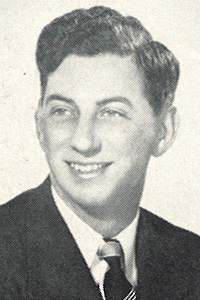 “In graduate school, I was with students from larger, more well-known schools, yet I felt I was the most well-prepared. … The education which I received at Ripon was outstanding and laid the groundwork for a variety of later careers — in research, teaching and administration.”
Trainer served as chief pathologist for the Department of Natural Resources while pursuing a Ph.D. in microbiology and veterinary science at UW-Madison. He was a faculty member at UW-Madison from 1960-1971 and was one of the principals in creating a graduate program in diseases of wildlife. His specialty in disorders of deer helped establish animal disease as an ecological factor in wildlife management.
He started at the University of Wisconsin-Stevens Point in 1971 at the invitation of Chancellor Lee Sherman Dreyfus, later governor of Wisconsin, who had been a fellow faculty member at UW-Madison. He served as dean of the College of Natural Resources, the first of its kind in American higher education, from 1971-1987. His tenure saw the college grow to become the largest undergraduate natural resources program in the United States.
There were about 500 students when he came to the college and 1,600 students when he retired in 1987. He is credited with helping mentor more than 5,000 natural resource professionals across the world.
“In many ways, my impact on the environment was through the students,” he said. “We prepared them to go out and work on the front lines. Those students were able to go anywhere, and we took great pride in helping them to get through school. They’re like extended family.”
Even after retiring, Trainer continued to impact the environment with endeavors such as serving on the Wisconsin Natural Resources Board, the Wisconsin Wildlife Federation, the Nature Conservancy and numerous other organizations.
He was a founder of Intra-State Recycling, a pioneering volunteer recycling group in the days before mandatory recycling. He also helped found the 28-mile Green Circle Trail in the Stevens Point area and worked to establish the Plover River Alliance.
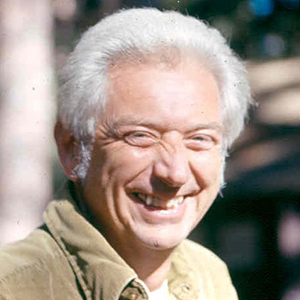 He co-edited three books, including “Infectious Diseases of Wild Animals” (1981), and published more than 120 papers on wildlife diseases.
In 1972, he was named only the third American to receive the Distinguished Service Award of the Wildlife Disease Association, and he was inducted into the Wisconsin Conservation Hall of Fame in 2006.
He received Ripon’s Distinguished Alumni Citation in 2005.
“I’ve always had the best job in the world – natural resources and young people, and all in the state of Wisconsin,” Trainer said.
He died Dec. 8, 2007, at the age of 81.