Lori Stich
Posted September 28, 2026


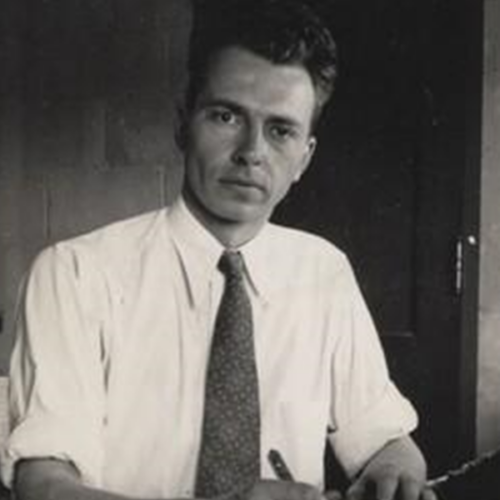
Class of 1923: Oceanographer
Floyd Melville Soule, Class of 1923, was a physicist, pioneer in oceanography and an authority on the Arctic.
He was born July 19, 1901, in Ripon, Wisconsin. At Ripon College, he majored in physics and mathematics and participated in Men’s League, Glee Club, the rifle team and the math club. He received Ripon College’s Distinguished Alumni Citation in 1947.
He also earned a degree in electrical engineering from George Washington University in 1927. In 1928, he became a junior physicist with the Department of Terrestrial Magnetism of the Carnegie Institute in Washington, D.C.
 He joined several Carnegie oceanographic expeditions including one making early observations of the upwelling along the edge of the North Equatorial Current in the Pacific and a 1931 exploration of the submarine Nautilus exploring the waters beneath the Arctic icepack.
For 30 years, from 1933 to 1963, he was the civilian senior physical oceanographer and chief scientist for the International Ice Patrol, operated by the U.S. Coast Guard. For eight years, he joined a number of expeditions to the Davis Strait and Labrador Sea and other sites.
He also assisted in the development of the shipboard salinity bridge, the beginning of modern oceanographic technology.
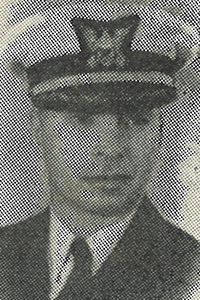
During World War II, he was commissioned as a lieutenant commander in the U.S. Coast Guard Reserves. He served on the Greenland Patrol because of his knowledge of arctic and subarctic conditions. Citing his “rare ability to translate academic knowledge into action,” he was awarded a Bronze Star from the U.S. Navy in 1945.
After the war, he resumed his position with the Ice Patrol and worked as a research associate in physical oceanography at Woods Hole Oceanographic Institution in Massachusetts.
He remained in the Coast Guard Reserves and was promoted to captain in 1956.
He retired from the Ice Patrol in 1963 after completing a series of comprehensive ocean current charts of the iceberg areas of the North Atlantic Ocean. The Coast Guard honored him with the Albert Gallatin Award, the highest honor given by the U.S. Treasury Department.
He died Feb. 15, 1968, at age 66.