Lori Stich
Posted September 28, 2026


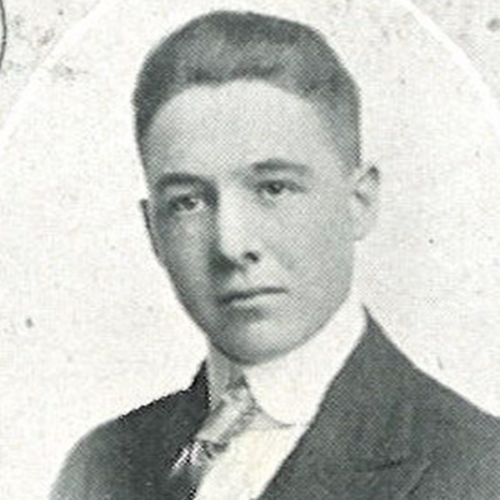
Class of 1918: Low-energy defraction
Harrison “Harry” Edward Farnsworth was a pioneer in the development of modern research in surface physics and a world leader in the field of low-energy defraction. He was an authority on the physics and chemistry of the surfaces of solids and a pioneer in the use of electrons for the study of metal crystal surfaces.
He was born March 24, 1896, in Green Lake, Wisconsin. At Ripon, he majored in physics, was a member of Tennis Club and German Club, and served as a fellow in physics and an assistant in physics.
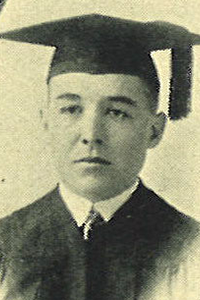 He earned his master’s degree and Ph.D. from the University of Wisconsin in 1921 and 1922. He earned a later doctorate from Fairfield University in 1971.
In his first published paper as a student in 1922, Farnsworth reported that some secondary electrons were reflected without loss of energy, an observation that anticipated by several years experiments which led to the discovery of the wave properties of electrons.
After teaching at the University of Pittsburgh, the University of Wisconsin and the University of Maine, in 1926 Farnsworth started at Brown University in Providence, Rhode Island, where he spent the next 44 years.
He advanced to full professor and the Annette L. R. Barstow University Professor before being appointed director of Brown’s Barus Electronics Laboratory, the world’s leading center for research on low-energy electron diffractions. So he and his colleagues could study the behavior of surface participles without chemical interference, he invented an “atomic cleaner” that took the surface of a solid beyond chemically clean to atomically clean.
Simultaneous activities included work with a war project at M.I.T., investigator for the National Defense Research Council, consultant for the Office of Naval Research, work with the Brookhaven National Laboratory and other industrial laboratories, National Physical Research Laboratory in Pretoria, South Africa, co-operating expert with the International Critical Tables, visiting research professor at Washington State University, and work with the Planning Division Office Naval Research in the summer of 1946.
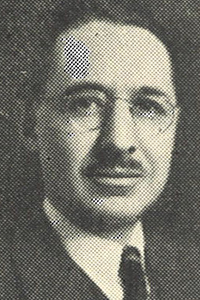 He published more than 100 technical papers and supervised research which resulted in more than 125 others.
After retiring in 1970, Farnsworth moved to Tucson, Arizona, and established the Farnsworth Research Laboratory at the University of Arizona, which he later moved to his home. He also served as a visiting professor in the department of physics at the university.
He was listed as a noteworthy physicist numerous times by Marquis Who’s Who, Who’s Who in America, Who’s Who in the World and other directories.
From Ripon, he received the Distinguished Alumni Citation in 1947, an honorary degree in 1977 and the Medal of Merit in 1984. He also established Ripon’s William Harley Barber Distinguished Professorship in honor of his former professor; and the Harrison E. Farnsworth 1918 Chair in Physics.
He continued his research almost until his death on Nov. 14, 1989, at the age of 93.