Lori Stich
Posted September 28, 2026


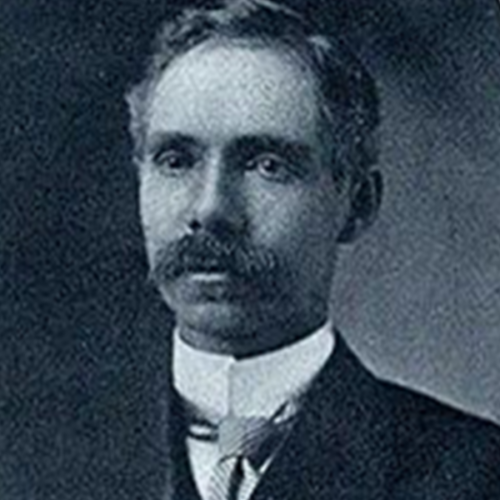
Class of 1879: Bird migration
Ornithologist Wells Woodbridge Cooke was called the “father of cooperative study of bird migration in America.” He received an AB degree from Ripon in 1879 and an AM degree in 1882, while also studying at the University of Iowa.
Cooke was born Jan. 25, 1858, in Haydenville, Massachusetts. About 1864, when he was 6 years old, his family moved to Ripon where his father, Elisha Woodbridge Cooke, became pastor of the Congregational church. Wells Cooke showed an early interest in natural history. After being given a gun at the age of 12, he began collecting specimens of common birds of the neighborhood and made frequent trips to Green Lake.
After graduation from Ripon College, he taught in American Indian schools in several states for the next six years. He wrote several papers about birds and began to focus on bird migration. In the winter of 1881–1882, Cooke asked ornithologists in Iowa for lists of winter residents and dates of the first arrivals of spring migrants. This long-term study was later expanded to cover the whole Mississippi Valley.
Cooke was associated with the University of Vermont from 1885 to 1893, where he was appointed professor of agriculture in 1886; the Agricultural College of Colorado from 1893 to 1900; and the State College of Pennsylvania from 1900 to 1901.
In 1901, he was appointed to the Biological Survey section of the United States Department of Agriculture, based in Washington, D.C. He worked primarily on bird migration and distribution, building on the earlier records and his network of participants.
He wrote more than 400 works about birds, bird distribution and migration, including “Bird Migration in the Mississippi Valley,” “Birds of Colorado,” “Bird-Lore,” “Routes of Bird Migration” and “Our Shorebirds and Their Future.”
He also founded the North American Bird Phenology Program, which housed bird migration records. By 1915, individual records of migration, many written in Cooke’s own hand, totaled one million.
The organization was dissolved in 1970 but revived in 2009. Online volunteers are scanning and transcribing records and storing them in a database for use by scientists, managers, educators, and the public. There are 6 million historical observations of more than 800 bird species, documenting occurrences and migration times from the 1880s through the 1970s.
Cooke died March 30, 1916, at age 58. A memoriam written after his death records that at a committal service following his funeral, “a bluebird uttered its plaintive note, a flicker called from a neighboring tree, and a mockingbird joined in and sang throughout the reading. What more appropriate rites for a true lover of birds!” His ashes were returned to Ripon for burial.