Lori Stich
Posted September 28, 2026


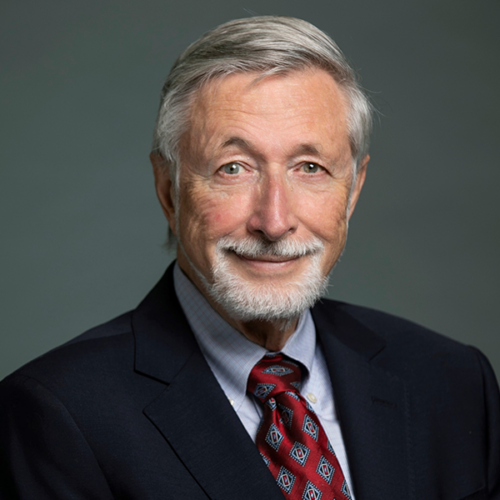
Class of 1963: Educator, Chief Scientist of the U.S. Air Force
When Alexander H. Levis retired in 2020, he celebrated 30 years of teaching electrical, computer and systems engineering at George Mason University in Fairfax Virginia.
He spent three of those years, 2001-2004, at the Pentagon, serving as the Chief Scientist of the U.S. Air Force, advising the Chief of Staff and Secretary of the Air Force on a wide range of scientific and technical issues.
He was born in October 1940 in Ioannina, Greece. He came to Ripon in 1959 and majored in mathematics and physics.
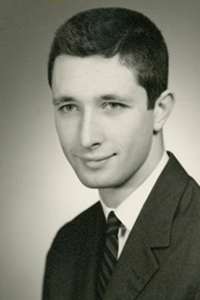 “In my second year at Ripon (junior year), Prof. Dino Zei hired me as research assistant to take measurements with a new instrument he had obtained,” Levis said. “He was on academic leave that year at Argone National Lab so I had access, along with a classmate, Bruce Salvesen, to his office where the instrument was. So, we spent most of our time there studying. I wanted to make sure I would be admitted in the 3-2 program at MIT.”
He finished a dual bachelor’s degree at the Massachusetts Institute of Technology, and then the master of science, master of engineering and doctor of science degrees in mechanical engineering with a specialization in control systems.
He taught at the Polytechnic Institute of Brooklyn from 1968-1973, headed the Systems Research Department at Systems Control Inc. in Palo Alto, California, from 1973-1979, and was a senior research scientist at the Laboratory for Information and Decision Systems at MIT from 1979-1990.
In 1990, he joined the faculty at George Mason University, where he served two terms as department chair for Systems Engineering and taught courses on architecture-based systems engineering design for the next 30 years. He also served as head of the System Architectures Laboratory.
In addition, Levis has served on the Advanced Technology Board of the Office of the Director of National Intelligence, the NASA Advisory Council, the Homeland Security Science and Technology Advisory Committee, the Air Force Scientific Advisory Board. and the Scientific Advisory Board of the Institute of Human and Machine Cognition. He held a wide variety of positions in the Institute of Electrical and Electronic Engineers (IEEE) including president of the Control Systems Society and in the International Federation on Automatic control (IFAC).
His research has been focused on multi-formalism modeling to address national security strategic issues, architecture design and evaluation, and resilient architectures.
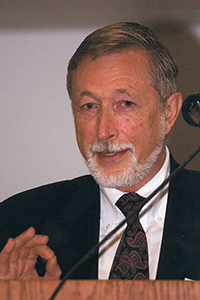 He is a Fellow of IEEE, of the International Council of Systems Engineering (INCOSE), and the American Association for the Advancement of Science (AAAS) and an Associate Fellow of the American Institute of Aeronautics and Astronautics (AIAA).
He has more than 320 publications, including a three-volume set he co-edited, “The Science of Command and Control,” published by AFCEA, and “The Limitless Sky: Air Force Science and Technology contributions to the Nation,” published by the Air Force.
He received the Exceptional Civilian Service medal from the Air Force three times, in 1994, 2001 and 2004, and the Meritorious Civilian Service medal in 2008 for contributions as a member of the Air Force Scientific Advisory Board and as chief scientist. He also received the Air Force Chief’s Medallion and the Third Millennium medal from the Institute of Electrical and Electronics Engineers. In 2005, he received the Enduring Achievement award from the C2 Research Program of the Office of the Assistant Secretary of Defense (NII)
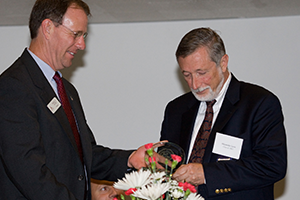
Then-President David Joyce presents Alexander Levis with his Distinguished Alumni Citation in 2008.
Ripon honored Levis with a Distinguished Alumni Citation in 2008, and he served on the Ripon Board of Trustees from 2022 to 2025.
” Ripon College was key to my professional development in three ways: by offering me a full scholarship it enabled me to come to the U.S. for my university studies.
“Ripon College, being a small college and rather isolated (it was only 600 students then) allowed me to adapt easily to the U.S. and concentrate on my studies. The 3-2 program with MIT made it possible to continue my education in engineering.
“The liberal arts education at Ripon made it possible to approach systems engineering research with a multi-disciplinary outlook that is not very common among engineers,” Levis said.