Jonathan Muraskas
Posted November 4, 2026


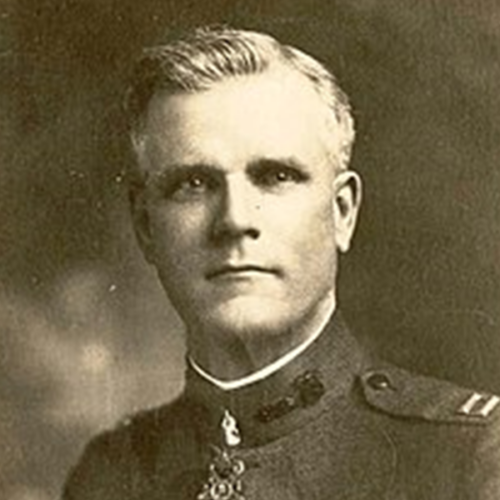
Class of 1906: Congressional Medal of Honor
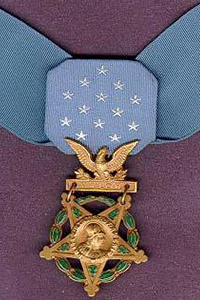
Frank LaFayette Anders, Class of 1906, received the Congressional Medal of Honor in 1906 for heroic actions on May 13, 1899, during the Philippine Insurrection. The practice then was to receive the medal through the mail and not from the current president; but 57 years later, Anders was honored again at a reception held by President John and Jacqueline Kennedy on May 2, 1963.
His citation read: “With 11 other scouts, without waiting for the supporting battalion to aid them or to get into a position to do so, charged over a distance of about 150 yards (140 m) and completely routed about 300 of the enemy who were in line and in a position that could only be carried by a frontal attack.”
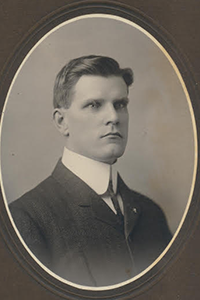 Anders was born Nov. 10, 1875, at Fort Abraham Lincoln, Dakota Territory, in what is now Fort Abraham Lincoln State Park. His father, Frank, was stationed there with the Infantry and died in 1890 of wounds suffered in the Civil War. At age 15, Anders left school to work for Northern Pacific Railroad and trained as a machinist.
In 1894, he enlisted in the National Guard and was serving his second enlistment when his unit, the 1st North Dakota Volunteer Infantry, was sent to the Philippines in 1898. He later served in the Spanish-American War and as a captain in the Corps of Engineers during World War I.
In 1902, with only a seventh-grade education and a few months of study at Dakota Business College, he entered Ripon College and graduated with a degree in engineering. He was the first person to be awarded a scholarship by the University of Wisconsin-Madison, where he studied civil engineering.
In his long and varied career, he was an engineer, businessman, amateur military historian and politician, often working in several capacities simultaneously.
In 1918, he was commissioned a captain in the Engineering Corps and was stationed at Fort Dodge, Iowa, where he wrote a history of the camp. He transferred to Fort Riley, Kansas, and was in charge of hospital facilities. He also served in Washington, D.C., and at the Henry Ford Hospital in Michigan.
 From 1922 to 1932, he was Regimental Utility Officer and led a five-year construction program at Camp Grafton. He also served as an engineer, promoting the Missouri River Diversion project and as president of the Great Plains Development Association.
He was chief engineer with Utah Smelting Corp.; mathematics instructor at North Dakota Agricultural College; city engineer for Fargo, for which he designed, helped construct and operated the Fargo Filtration plant; general manager of the Lucky Strike Coal Co.; consulting engineer and secretary of the North Dakota State Capitol Commission; and a member of the Fargo City Water Commission.
Ripon presented him with a Distinguished Alumni Citation in 1947.
He died Jan. 23, 1966, at age 90 and is buried in Ripon, Wisconsin.