Jonathan Muraskas
Posted November 4, 2026


Class of 1998: Taking on catastrophic disease
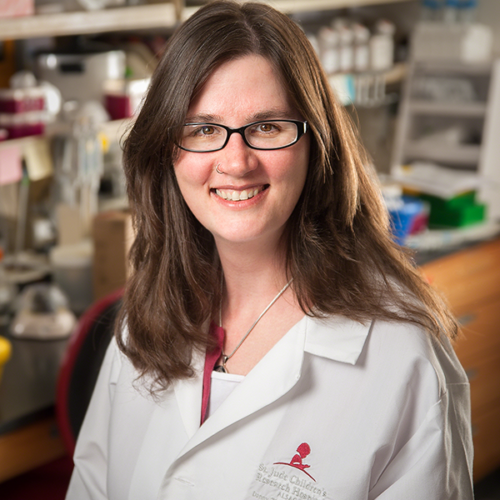
When Shannon McKinney-Freeman was in high school, her father was diagnosed with myelodysplasia and required a bone marrow transplant. That experience led to a career path where she now is a Member (full professor equivalent) in the Department of Hematology at St. Jude Children’s Research Hospital in Memphis, Tennessee.
“I think that’s a common story with a lot of scientists,” she said. “Often there’s a personal connection.”
McKinney-Freeman was born in Denver, Colorado, where her father was stationed in the Air Force, and she grew up outside Air Force bases in Germany and Washington State.
As a first-generation college student from a family with limited means, she found a home at Ripon College. Ripon offered her generous financial aid and the small liberal arts and sciences setting appealed to her. “It built good, intimate, mentoring relationships,” she said. “That got me on the right path to be very successful and got me exposed to things I might not have at a much larger campus.”
At Ripon, she majored in chemistry and biology and participated in numerous activities, including EGOR, Multicultural Club, and Students for a Free Tibet, and as a founder of an Amnesty International chapter and a member of a committee to select a name for what would eventually be called the Ceresco Prairie Conservancy.
“My fondest memories mostly took place in Farr Hall,” she said. “Mostly, I remember time with friends and my mentors, especially Drs. Peggy Stevens, Colleen Byron, and Rich Scamehorn. The folks I connected with at Ripon are still some of my favorite people in the world.”
 She went on to earn a Ph.D. in immunology from Baylor College of Medicine in Houston, Texas, in 2003. In her post-doctoral training at Children’s Hospital Boston and Harvard Medical School, she characterized the phenotype and function of pluripotent stem cell-derived hematopoietic progenitors, as well as acquired and analyzed the global gene expression profiles of hematopoietic progenitors throughout mammalian ontogeny.
Since joining the Department of Hematology at St. Jude in 2010, she has committed her research lab, the McKinney-Freeman Lab, to understanding the fundamental biology of blood forming stem cells. She is the principal investigator.
She is widely published with more than 50 research articles, and she is the current president of the International Society of Experimental Hematology. She also directs an NIH T32-supported training program for postdoctoral fellows to develop their skills as experimental hematology researchers at St. Jude.
“The mission of St. Jude is wonderful – taking care of children with catastrophic diseases, especially cancer and sickle cell disease,” she says. “It’s the only National Institutes of Health-designated cancer center that focuses on pediatric cancer research. It brings in funding. It allows people like me to do the work that we do.”
She said her job allows her to run her own research laboratory at an institution with a great mission and tremendous resources. “In St. Jude’s culture, all employees feel they are part of the bigger mission,” she said. “I think it’s very motivating. I’m not a physician, but the clinic and the research sides of the hospital are very integrated. We see these patients and their families every day. It’s a constant reminder of why you do what you do – as is my Dad’s picture on my desk.”