Exercise Physiology Track
Posted November 5, 2026


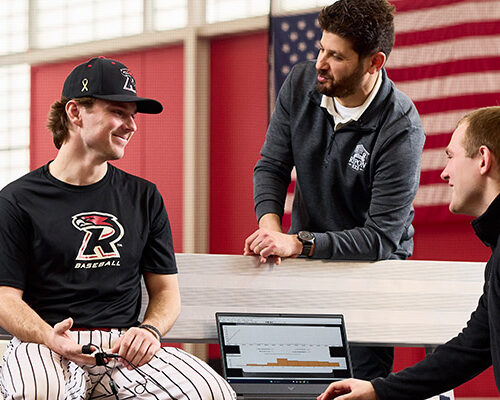
Every sporting event has another operation taking place beyond what spectators see. Facilities have to be managed. Budgets influence decisions. Events require planning. Marketing brings audiences through the doors, while public and media relations shape how teams and organizations communicate with the people who follow them.
Ripon College’s Sport Management track approaches sport from this organizational and business perspective. Offered within the Master of Exercise Science program, the specialization gives graduate students an opportunity to examine how decisions are made, resources are managed and organizations operate within the sports industry.
The track includes coursework in management, governance, law, finance, facilities, events, marketing and communications. Students can develop this focus while also completing the research, ethics and analytical coursework that forms the foundation of Ripon’s graduate Exercise Science program.
What Keeps a Sports Organization Running?
The visible side of sport represents only a portion of the work involved in operating a team, athletic department, facility or sports organization. Behind it are decisions about people, policies, budgets, regulations and organizational priorities.
Organizational Theory and Governance in Sport examines how sports organizations are structured and governed. Financial Issues in Sport introduces another important part of management by considering financial matters within the context of the sports industry. Legal Issues in Sport adds questions of law and responsibility that can influence decisions across athletic and recreation environments.
Taken together, these subjects provide a wider view of sport management. Students are not examining business concepts in isolation. They are considering how those concepts function within organizations that have their own structures, stakeholders and responsibilities.
From the Facility to Game Day
A successful event depends on much more than the competition itself. The experience can involve facility operations, scheduling, staffing, logistics and coordination long before participants or spectators arrive.
Sport Facility and Event Management gives students an opportunity to examine this operational side of the industry. The subject connects larger management concepts with the practical considerations involved in creating and maintaining environments where sports and events take place.
For students interested in athletic departments, recreation, sporting events or facility operations, this part of the curriculum offers a different perspective on the industry. Instead of viewing the venue simply as the setting for sport, students can consider the planning and management required to make that setting function.
Reaching an Audience and Representing an Organization
Sport also competes for attention. Organizations need to communicate with fans, participants, communities, media and other audiences, making marketing and public relations important pieces of the broader operation.
Ripon’s Sport Marketing and Promotions course examines the marketing side of the industry, while Public and Media Relations in Sport focuses attention on organizational communication. These subjects give students a chance to consider how sports organizations present themselves, engage audiences and communicate beyond the field of play.
The combination is particularly relevant in an industry where operations and public perception frequently intersect. An event, organizational decision or unexpected situation can quickly become a communications issue as well as a management issue.
Shape Your Graduate Coursework Around Sport Management
Students pursuing the Sport Management track complete at least 15 specialization credits. Course options include:
No specific undergraduate major or minor is required for admission to Ripon’s Master of Exercise Science program, and unlike the Exercise Physiology specialization, Sport Management does not have additional undergraduate course prerequisites.
Students also complete the graduate core in Research Methods, Measurement and Statistical Analysis, Ethical Issues in Health and Sport, and Topics in the Exercise Sciences or an elective. The program concludes through a thesis, comprehensive exam or approved graduate internship option.
Bringing Sport Management Into Practice
Graduate education in sport management can connect with many different parts of the sports industry. Ripon identifies areas including athletic administration, event coordination, facility operations, sports marketing, public relations, sales and other organizational roles among the possibilities associated with the specialization.
The broader Master of Exercise Science program also provides opportunities to move learning beyond coursework. Graduate internships may be available in sports marketing, management and sales, while graduate assistantships can provide experience in athletics or research.
For students who are interested in sport but find themselves equally interested in what happens around the competition, the Sport Management track provides a way to examine the organizations, decisions and business functions that help make sport possible