Lori Stich Obluda
Posted September 28, 2026


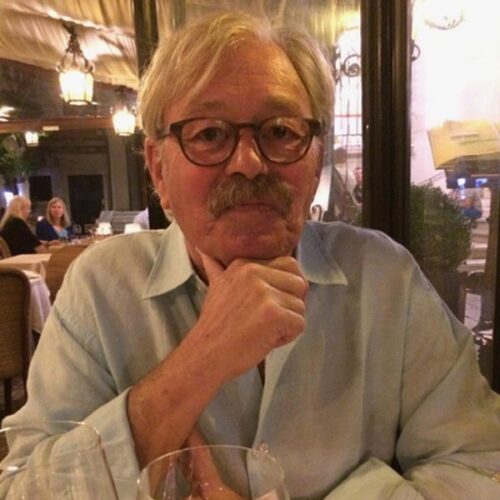
Class of 1967: Academy Award-winning sound editor
A major element in an emotional response to a film or documentary is the sound accompanying the images. Tom Bellfort has brought his expertise in sound to more than 80 motion pictures, numerous television series and dozens of video games.
He was born Thomas Allen Bellfort Feb. 1, 1945, in New York City. He spent most of his childhood in France where his father was the head of the Foreign Distribution for RKO Films. “We lived in France for 13 years, beginning in 1947. Pretty much French was my first language,” he said. “I was exposed intimately and early on to both business and creative aspects of film.”
At the High School of Music & Art in New York, he studied piano and violin, and “I have always been drawn to sound as a primordial experience,” he said.
He followed his brother, David Bellfort, Class of 1963, to Ripon, attended for two years and majored in French and philosophy. “I have many fond memories (of) how wonderful the faculty was and how much I owe them in my development as a thinking individual.”
After he finished a Master of Fine Arts degree at the California Institute of the Arts, “a dear friend, Paul Hirsch, picture editor on the very first ‘Star Wars,’ opened my ears to the artistic soundscape possibilities of film and convinced me to take my first job as an apprentice.”
He has worked across the spectrum of film entertainment, earning dozens of wins and nominations for awards. He won an Academy Award (Oscar) for “Best Effects, Sound Effects Editing” for the film “Titanic” in 1997 and a nomination from both the Academy Awards and the BAFTA Film Award for “Star Wars: Episode I: The Phantom Menace” in 1999.
 He won Primetime Emmy Awards for an episode of “The Young Indiana Jones Chronicles” in 1993 and “The Pacific” in 2010.
Other film projects include “Amadeus,” “The Cotton Club,” “The Princess Bride,” “Big,” “Steel Magnolias,” “Driving Miss Daisy,” “Mission Impossible,” “Fight Club,” “The Terminator” and “HellBoy.”
“Movies create a powerful reality, transporting the viewer to magical worlds and experiences of what is really but a grand illusion,” Bellfort said. “King Kong was just a big puppet brought to life through stop-motion photography, and the Titanic was just a set that never moved through water.
“Film is important for people in society because it has its power to create a communal experience of worldwide accessibility. In the United States alone, there are more than 30,000 screens project movies. From the largest cities to the smallest towns, there is a movie theater, and this makes film a most democratic, accessible and universal expression.”
Theatrical performances are compelling for him because he appreciates the cadence: gesture, expression and emphasis from the directors and actors who add meaning to the art, he said. “I have had the pleasure of working with some of our finest actors and honor the great insight they bring to the world. What I have loved and cherished about my career is that I have always worked freelance, each project always different with new challenges and opportunities.
“(Filmmaker) George Lucas is quoted as saying, ‘Sound is 50% of the film experience,’ and I hope my contribution measured up to it.”
Bellfort received Ripon’s Distinguished Alumni Citation in 2026.