Lori Stich Obluda
Posted September 28, 2026


Slavic Studies
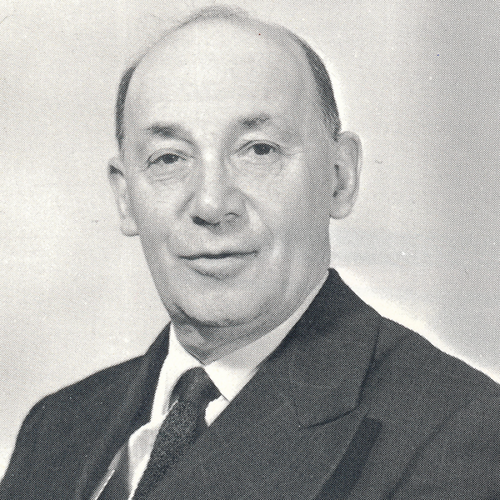
From 1958 to 1963, the former Polish minister of education was the director of Slavic studies at Ripon College.
In 1958, Ripon College applied for a grant to support a professor of sociology to the John Hay Whitney Foundation, an agency which placed outstanding teaching faculty in the humanities at independent colleges throughout the United States. The match ultimately was made with Waclaw Jedrzejewicz (Ye-dje-ye-vich), who had recently retired as a professor of Russian at Wellesley College in Massachusetts.
Jedrzejewicz was born to a Polish family in what is now part of Ukraine Jan. 29, 1893. When World War I broke out in 1914, Jedzrejewicz fought in the Polish army against the Russians and Germans who, over the previous century, had divided traditional Polish lands along with the Habsburg Empire and Lithuania.
After Poland was reconstituted at the Polish-Russian Peace Conference at Riga in 1921, a meeting that Jedrzejewicz attended, he entered government service. From 1925 to 1928, he served as a military attaché from Poland to Japan and eventually served as Polish minister in Tokyo. In 1928, Jedrzejewicz returned to Poland to serve in several government positions, first as director of the Consular Department and later in the Ministry of Education. In 1934, he became Poland’s Minister of Education and served for one year before retiring from government service.
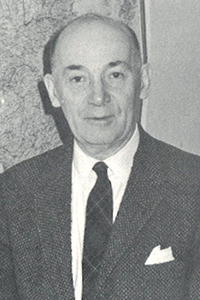 When Germany invaded Poland in September 1939, Jedrzejewicz fought with the Polish forces until they capitulated and he was forced to flee. Jedrzejewicz escaped the Germans via Romania, France and London before arriving in the United States in 1941. Two years later, he helped found the Pilsudski Institute of America for Research in the Modern History of Poland in New York City. He was the executive director until he found a position teaching Russian at Wellesley College. This position lasted for 10 years until Jedzrejewicz reached the compulsory retirement age of 65. Ripon then was able to hire Jedzrejewicz by offering annual contracts which did not include tenure.
At Ripon, Jedrzejewicz was chair of the Russian department and quickly became well-liked and respected. He became known as Dr. J. His classes in the Russian language and Russian literature in translation and Russian-Central European history grew steadily, most likely because of the breadth of life experience from which he spoke.
Robert “Spud” Hannaford, professor emeritus of philosophy, remembered Jedrzejewicz as a distinguished and gracious, “almost self-effacing” host, who enjoyed entertaining at his faculty apartment on Oak Street. At these events, Jedrzejewicz offered humorous and understated toasts such as, “A toast, because we’re having an evening party!” to accompany the infused vodkas he often served.
In 1963, Jedrzejewicz returned to New York to again become director of the Józef Piłsudski Institute of America, which he co-founded.
Ripon honored him with an honorary degree in 1990.
He died Nov. 30, 1993, at the age of 100.