Lori Stich Obluda
Posted September 28, 2026


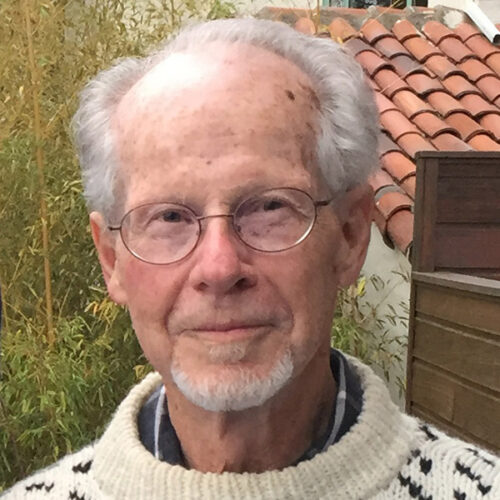
Class of 1954: Nobel Prize laureate
The 2009 Nobel Prize in economic science went to a Ripon College alumnus, Oliver Eaton Williamson, who was a pioneer of organizational economics.
He was born Sept. 27, 1932, in Superior, Wisconsin. He majored in economics at Ripon from 1950 to 1952 on a dual two-year/three-year degree in conjunction with the Massachusetts Institute of Technology. He received his bachelor’s degree from MIT in 1955, his master’s from Stanford University in 1960 and his Ph.D. from the Graduate School of Industrial Administration at Carnegie in 1963.
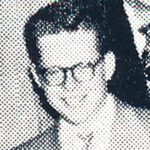 Originally, Williamson’s focus was in engineering, but over the course of his academic career, his interest shifted to economics. “My interest in economic organization evolved – from engineering to business to interdisciplinary economics and organization, to which aspects of the law were added,” Williamson said.
He was a project engineer for General Electric and the U.S. government in Washington, D.C. He taught at the University of Pennsylvania from 1965 to 1983, was a professor of economics of law and organization at Yale until 1988 and then taught at the University of California, Berkeley, from 1988 until retiring in 2004. He continued to conduct research and present workshops.
“My calculus teacher at Ripon, Dr. (Clifford) Crump — but widely described as C4 — was an exceptionally important teacher. I got off to a slow start but recognized that calculus was important and that C4 was a very fair but demanding teacher. With a lot of hard work, I got my A, which carried over to my classes at Ripon and MIT more generally. I tried to teach my own students in the same manner.”
Williamson’s Nobel Prize-winning theory focuses on the differences between market and nonmarket economic transactions, when decisions should be left up to the market and when they should be decided within an organization.
“Before Williamson, the neoclassical ‘theory of the firm’ wasn’t very deep,” said Paul Schoofs, Ripon College professor emeritus of economics. “It implicitly assumed that all of its leaders shared the same goal and the same approach to achieving it. His work on organizational behavior was an early contribution to a process in economics, still ongoing, of incorporating insights from psychology and sociology to better understand the decisions and the actions of business firms.”
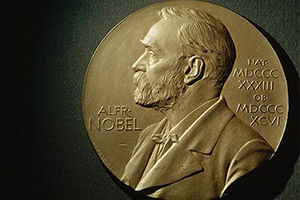 The win came as a bit of a surprise to Williamson. “My students in 2004 asked me when I was going to receive the Nobel Prize. I told them that I was unsure that I would get the prize,” he says. “I further remarked that if I did not get the prize before 2010 that I doubted that I would ever get it. As it turned out, I got the Nobel Prize in 2009.”
Williamson received multiple awards, honorary doctorates and fellowships, including being appointed a Distinguished Fellow of the American Economic Association in 2007. Several of his works were published as books.
Williamson attributed his accomplishments to several things: “A lot of good schools, good family, good colleagues, good students and hard work.”
His daughter, Karen Williamson Indergand, is a member of the Class of 1983.
He died May 21, 2020, at age 87.