Jonathan Muraskas
Posted November 4, 2026


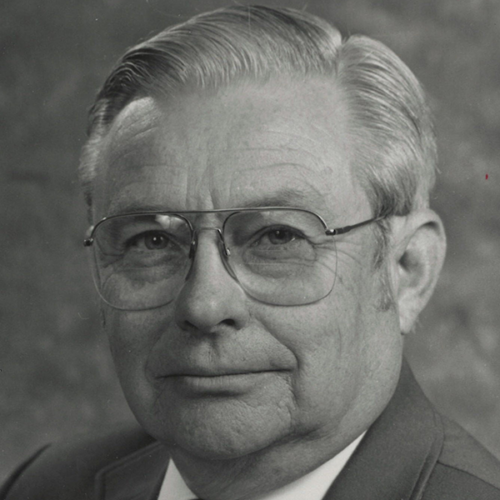
Class of 1951: Forensic pathologist
At the age of 12, Richard Coe Froede decided to become a medical doctor, and specifically a pathologist, because he liked the idea of being a medical detective. He went on to become one of the world’s most renowned forensic science experts and the first-ever Armed Forces Medical Examiner with coverage around the world.
He was born May 1, 1929, in Milwaukee, Wisconsin. At Ripon he majored in zoology and biology and participated in productions, fraternity and the student newspaper. He received his M.D. from Marquette University School of Medicine in 1955.
 For 21 years, he served in the U.S. Air Force at locations in the United States, England and Germany. After retiring from the service with the rank of full colonel, he taught pathology at the University of Arizona Medical School in Tucson for 11 years while also serving as chief medical examiner of Pima County and eight other Arizona counties.
He helped create The Armed Forces Medical Examiner System (AFMES), the only medicolegal death investigation system of the U.S. federal government, at the Armed Forces Institute in Washington, D.C. He was named this country’s first Armed Forces Medical Examiner and a Distinguished Scientist in Forensic Sciences from 1988 to 1992.
In 1988-89 alone, he was involved in 11 disaster situations throughout the word, including the U.S.S. Iowa explosion, Pan Am Airlines crash over Scotland, the Higgins in Lebanon and the Leland in Ethiopia.
He also served as a consultant to the United Nations World Court at The Hague regarding war crimes in Bosnia and to the National Aeronautics and Space administration (NASA) for Project Gemini from 1963 to 1965.
A strong advocate for forensic pathology, he was actively involved in the American Society of Clinical Pathologists, College of American Pathologists and American Academy of Forensic Sciences, and he published number papers and the book “The Scientific Expert in Court: Principles and Guidelines.”
At various times, he also was a professional lecturer in forensic pathology at George Washington University and an adjunct professor of law at Georgetown University.
He remembered Henry Meyer, professor of biology, as his favorite Ripon professor, and his fondest Ripon memory as “golfing with Miss (L. Leone) Oyster (assistant professor of chemistry) after lab.”
He died Feb. 9, 2011, at age 81 and is buried at Arlington National Cemetery.