Jonathan Muraskas
Posted November 4, 2026


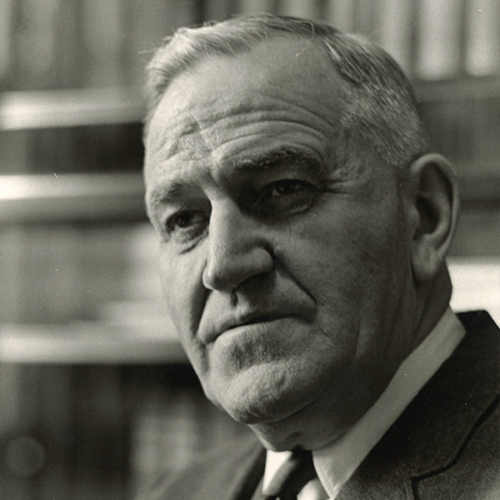
Class of 1927: Maternal healthcare
As one of the nation’s most respected obstetricians, Duncan E. Reid, Class of 1927, summed up his professional work in a dedication in his 1962 work “A Textbook of Obstetrics”: to “those who work together toward achievement of the initial right of man to be born without handicap and the privilege of women to bear without injury.”
He was born in December 1905 on a farm near Burr Oak, Iowa. At Ripon College, he majored in biology and was an all-conference guard in basketball. He received his medical degree from Northwestern University (Chicago) School of Medicine in 1932.
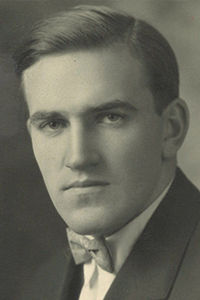 He was a resident in obstetrics between 1933 and 1935 at Boston Lying-In Hospital. He remained on staff there, eventually becoming chief of staff in 1959. The Free Hospital for Women and Boston Lying-In Hospital were consolidated in 1966 and became the Boston Hospital for Women. Reid became chief of staff of that institution.
Concurrently, he joined Harvard Medical School as a research fellow in obstetrics in 1935 and remained with Harvard for 36 years. He advanced to become a professor of obstetrics and gynecology. When the departments of obstetrics and gynecology were combined for the first time in 1959, Reid became chairman of the combined department.
During his years at both institutions, Reid served as a consultant at several Harvard-associated teaching hospitals in the area.
He served as the president of the American College of Obstetricians and Gynecologists in 1967-68.
After retiring from Harvard Medical School in 1972, Reid was a professor of maternal health at the new University of Arizona College of Medicine and on the staff of the university hospital until his death. He wrote to Ripon, “Besides teaching and writing, certain of the Indian problems as they relate to medical education is taking some of my time.”
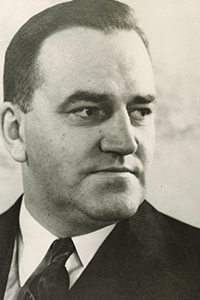 His research focus was on the biology of reproduction and medical complications in pregnancy, such as hypertension, coagulation defects, cardiac dysfunction, eclampsia, toxemia and prolonged labor. He was the author of more than 140 articles and the books “Controversy in Obstetrics and Gynecology” (1969) and “A Textbook of Obstetrics” (1962), and co-author of a later revision “The Principles and Management of Human Reproduction” (1972).
Ripon College presented him with the Distinguished Alumni Citation in 1947.
Reid died Nov. 6, 1973, at age 67.