

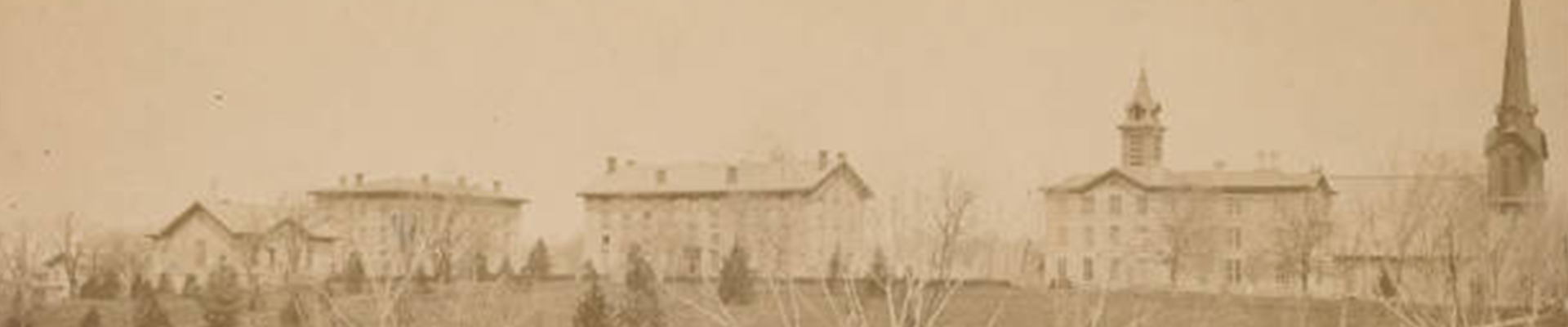
Ripon College: Founded with devotion and vision by everyday citizens
In 1849, Captain David P. Mapes arrived in the area that would become Ripon and started to found a settlement along a “silver creek weaving its way through Wisconsin’s rolling hills.”
To encourage the growth of the community through the ideals of outstanding education, he donated an acre of land on the highest point in the village to found a college. This was dedicated “for the formation of a corporation for mental improvement and the promotion of education,” he declared.
In 1850, there were only four private colleges and the university in Madison in the new state of Wisconsin, which was founded in 1848. Mapes made establishing the college in Ripon his mission by relentless promotion and fund-raising. The funding was wholly furnished by the individual people of Ripon.
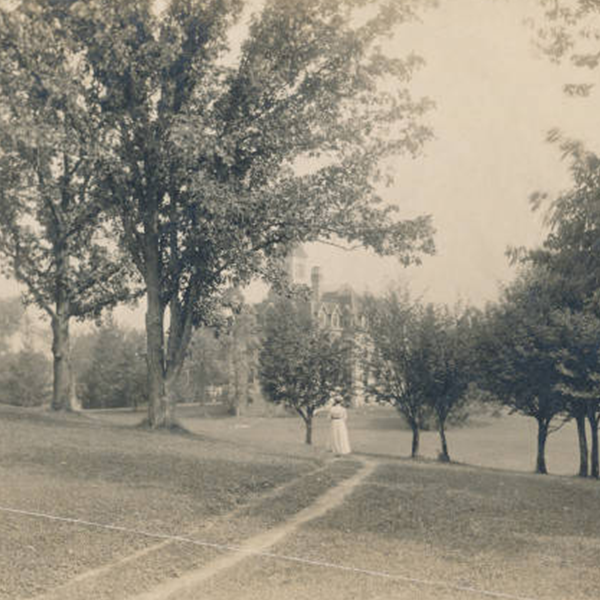
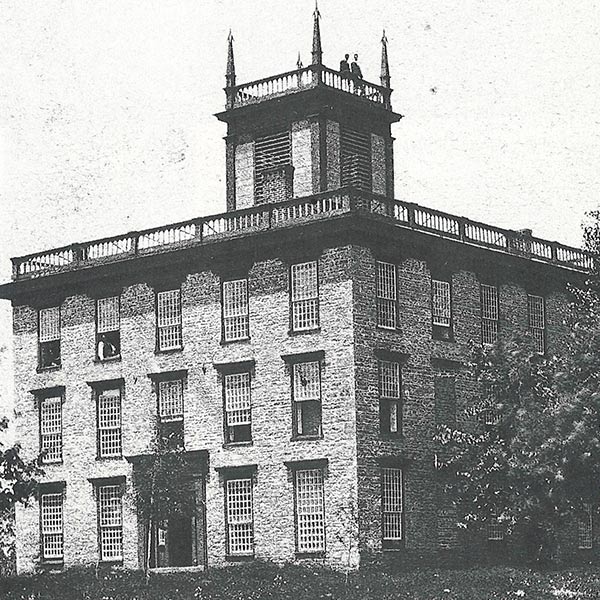
Many who were unable to contribute financially showed their support by pledging building materials and personal labor to erect the first building.
During a snowstorm on Jan. 29, 1851, the first building, Brockway Hall, later to become East Hall, was staked out. One observer wrote about the occasion: “The novelty, the boldness and the utility of the enterprise; the tireless efforts of a few determined spirits; the unequaled beauty of the location, all united to attract the sympathy and munificence of the surrounding country.”
Funding was still an issue in the small community with limited means. “The leaders of the project parted with their gold watches and other prized processions brought from the east, gladly sacrificing the luxuries of the past for the hope of the future,” wrote Samuel M. Pedrick, Class of 1891, in a sketch published in the 1964 book “A History of Ripon, Wisconsin.” “Subscriptions were taken from everyone who could make a gift of any kind.”
“The History of Fond du Lac County, Wisconsin” publication in 1880 remarked about the extraordinary way Ripon College came to be: ”At that time, there were fourteen houses and shanties in this little hamlet of Ripon, all told; and the commencement of anything so pretentious as a college, in so small a community, without a penny of foreign aid, would have seemed preposterous to the average mind, but it was done nevertheless, and there stands the college today, the chief supporting pillar of Ripon.
“Considering all the circumstances, the times, the poverty of the county, the sparseness of the population, the infinitesimal size of the village — the erection of the first college building — stone, fifty feet square, three stories high, with observatory, and so on — was a great achievement. It is safe to say that four persons, or four families, subscribed four-fifths of all the money it cost, and it is also safe to say that three of the four contributed one-tenth of all they were worth in the world to this single enterprise. … This is the result of the efforts of those far-sighted, persistent, self-sacrificing men.”
The school was chartered as Brockway College, honoring William S. Brockway, who pledged the largest amount in a fund-raising campaign for that purpose. Mapes became president of the first Board.
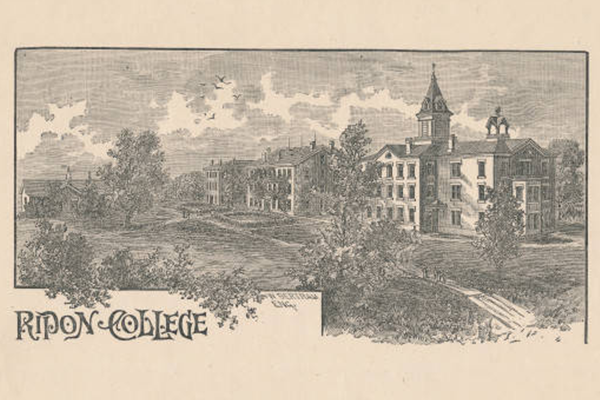
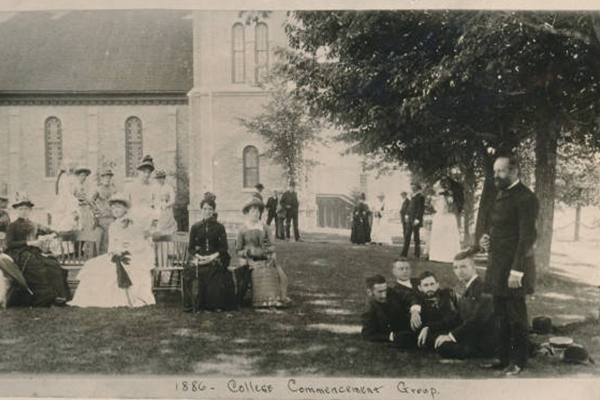
Slowly, as more funding was secured, construction and the establishment of classes progressed. The institution began as a college preparatory school. Classes were suspended in 1861-1862 as the 1st Regiment of Wisconsin Calvary was mobilized and housed here during the Civil War. However, two dedicated female instructors – Clarissa Tucker Tracy and Martha Wheeler, later Mrs. George Paine of Oshkosh – continued to provide private instruction on campus to keep education available.
The College was converted to a four-year private liberal arts college in 1863, and the name was changed to Ripon College in 1864. Its first class — four women: Luthera H. Adams, Harriet H. Brown, Susan A.W. Salisbury and Mary F. Spencer — was graduated in 1867.
The College has observed many notable achievements and innovations:
- College Days, the student newspaper, first appeared as a monthly literary magazine in 1868 and remains the oldest continually published college newspaper in Wisconsin.
- The Ripon football team first took the field against Lawrence University in 1893 (Ripon won 24-6) to begin what is believed to be the oldest football rivalry in the state. Ripon’s athletes now play in NCAA Division III in the Midwest Conference.
- The College is home to one of the oldest United States Army Reserve Officer Training Corps (ROTC) in Wisconsin. Ripon’s program was established provisionally in 1918 and officially recognized in 1919. It is a member of the Fox Valley Battalion.
- The National Forensic League, now called the National Speech and Debate Association, was founded on the Ripon College campus in 1925 by Bruno Jacob, Class of 1922, and later a longtime assistant professor of speech at Ripon. It is the nation’s oldest and largest high school debate and speech honor society, and the first national tournament was held at Ripon College in 1931.
- In recognition of its academic excellence, the College was awarded a chapter of Phi Beta Kappa in 1953, placing it among a select group of the nation’s top colleges.
- Ripon has had three Rhodes Scholars: Latimer Johns, Class of 1911; Thomas Reinecke, Class of 1968; and Zachary S. Morris, Class of 2002.
- A sustainability partnership between the Department of Natural Resources and Ripon College created the Ceresco Prairie Conservancy in 1997. It is a short walk from the lower campus, near the president’s house at 1 Merriman Lane. Included are 130 acres of restored native prairie, oak savanna and wetland habitat which serve as a serene oasis of recreation and an active outdoor classroom for Ripon College students.
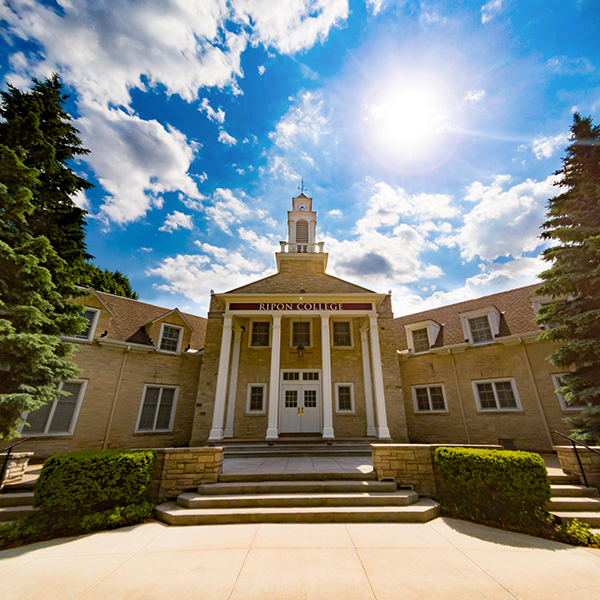
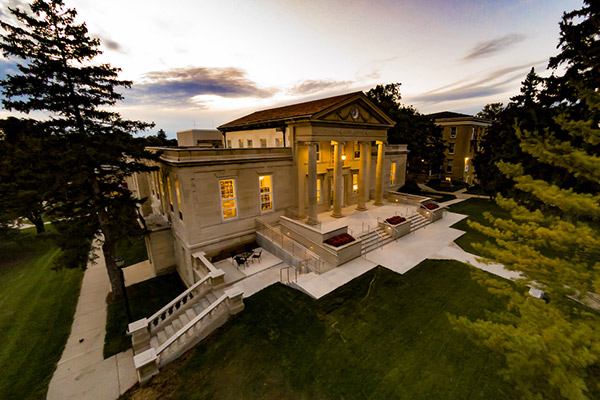
Today, Ripon’s campus encompasses 250 tree-covered acres and includes more than 25 buildings, the latest additions including Hopp Stadium; the renovated and expanded Willmore Center for athletics, health and wellness; and the Franzen Science Center. The original three limestone buildings which witnessed the Commencement of 1867 remain: East, Smith (formerly Middle) and West halls. These three, along with seven other campus buildings, were added to the National Register of Historic Places in 1995.
Ripon remains a traditional college of the liberal arts and sciences that looks ahead while honoring its distinguished past.
Join the Celebration
Looking to celebrate the 175 anniversary at Ripon College? Starting on Founders’ day 2026, Ripon College kicks off a whole year of celebration.