


YOUR PATH TO VET SCHOOL STARTS HERE
Whether you’re drawn to large-animal medicine, small-animal practice or something in between, Ripon’s pre-veterinary preparation pairs experience with the academic foundation you need to stand out. This is where future veterinarians get their start—and where your extraordinary begins.
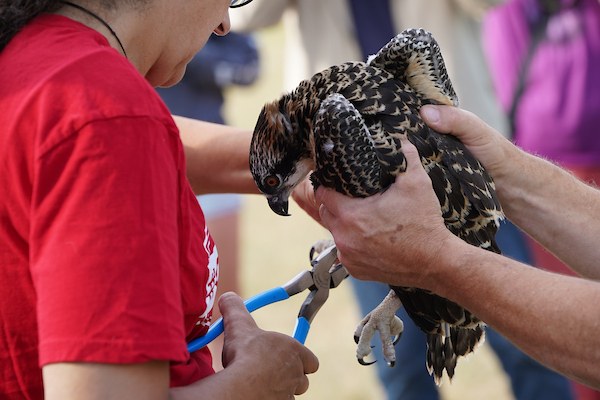
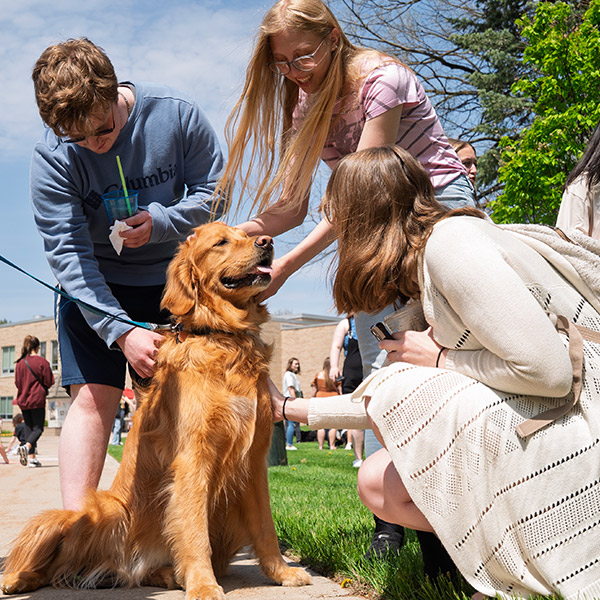
What Veterinary Schools Are Looking For
Veterinary schools are among the most selective professional programs out there, and admissions committees evaluate a broad, detailed set of criteria. At Ripon, you’ll build the full picture—academically and in the field with opportunities with animals.
Here’s what they’re evaluating:
Your undergraduate transcript and overall GPA
Standardized testing—usually the MCAT or GRE, typically taken in the spring of your junior year
- Animal experience with both large and small animals
- Direct exposure to veterinary medical settings
- Other preparatory experience that strengthens your application
- The college degree you’ve earned
- Extracurricular involvement
- Letters of recommendation
- A personal interview
Requirements vary significantly from school to school—often more so than medical school—so it’s essential to request a catalog directly from each veterinary school you’re considering and review its specific criteria closely.
BUILD THE RIGHT FOUNDATION
There’s no required major for veterinary school. But there is a roadmap—and we’ll help you follow it from day one.
- Choose coursework that builds a strong foundation for veterinary study
- Seek out animal work experience alongside your academic preparation
- Align your education and experience to strengthen—not just meet—your candidacy
Thoughtful, early planning across both academics and experience is the best way to position yourself as a competitive applicant.

RECOMMENDED PREREQUISITE COURSEWORK*
While specific requirements vary by school, this coursework will prepare you to meet most veterinary school prerequisites:
- Chemistry — General & Qualitative Chemistry (8–10 credits, CHM 112, 211) and Organic Chemistry (8–10 credits, CHM 111, 214)
- Biochemistry — 3–4 credits (CHM 422)
- Biology — General Biology/Zoology (5–6 credits, BIO 123, plus an animal biology course such as BIO 216)
- Genetics or Animal Breeding — 3 credits (BIO 219)
- Microbiology — 3–4 credits (BIO 314)
- Physiology — 3–4 credits (BIO 211-312)
- Physics — General Physics, 6–10 credits (PHY 131-152/172)
- Statistics — MTH 120 or PSC 211
- English — 3–6 credits
- Social Science or Humanities — 6–10 credits
- Electives — additional coursework to satisfy your target school’s specific requirements
Good to know: Some veterinary schools also require Calculus (MTH 201), along with coursework in animal behavior and husbandry—worth confirming early with your school of choice.
*The specific admission requirements vary from school to school, and a student should plan carefully to ensure their education and work experiences enhance their chances for admission.
READY TO START YOUR VETERINARY JOURNEY?
Your future in veterinary medicine doesn’t start after Ripon—it starts here, with faculty who know your name and a plan built around your goals.