

RESTORING OUR BACKYARD
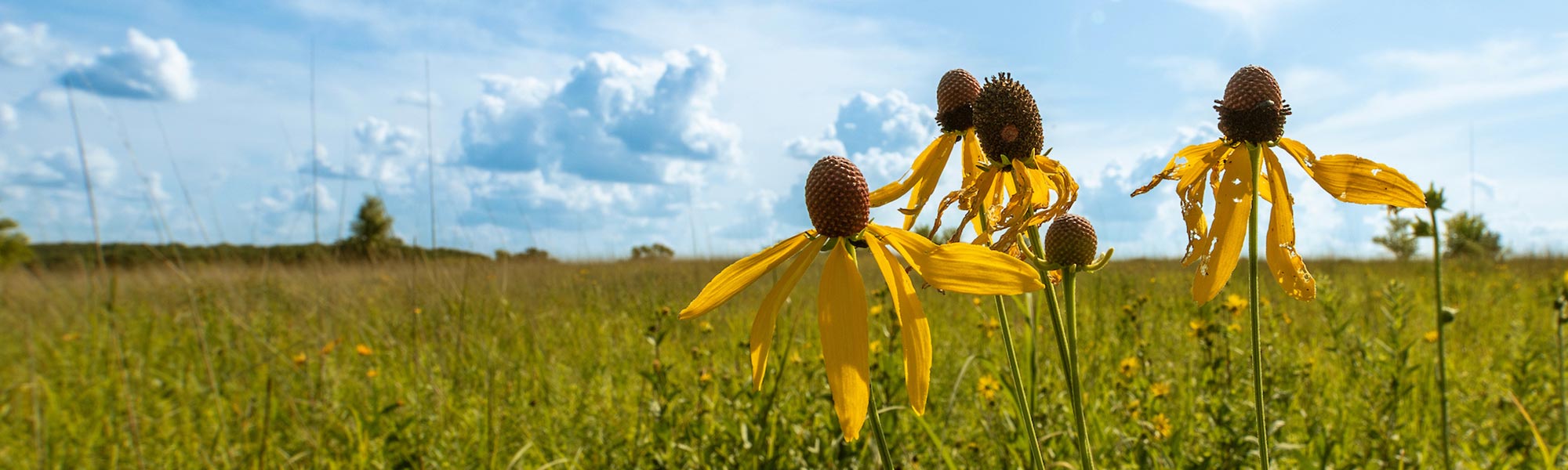
Take a short walk from the lower campus. It won’t be long until you reach the Ceresco Prairie Conservancy—130 acres of restored native prairie, oak savanna and wetland habitat. Started in 1997, this sustainability project is a partnership between the Department of Natural Resources and Ripon College. Today, it’s become a beloved place of college and community tradition.


LEARN AND LOVE THE ECOSYSTEM
At Ceresco, students don’t just study an ecosystem. They help rebuild one. Each year, they reseed the prairie, harvest native seeds and battle invasive species, watching the landscape change season by season because of their work.
The prairie is also a classroom without walls. Students in botany, ecology and animal biology courses carry out their own research on the plants and animals that live here, and an environmental classroom brings coursework directly into the field. Its reach goes well beyond the sciences, too: the college uses the prairie “for classes from biology, to environmental studies, to history, to art. Everything,” says Associate Professor of Biology Ben Grady.
A RARE DISCOVERY
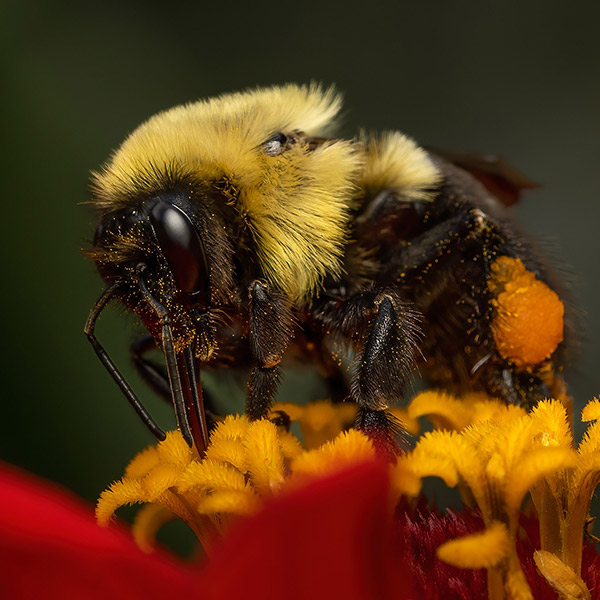
In 2020, during a survey of the prairie’s pollinators, Grady and Christina Seese ‘23 photographed a bee they had hoped to find: the rusty patched bumble bee, a federally endangered species once common across the upper Midwest. The Wisconsin Bumble Bee Brigade confirmed the identification, marking the first time the bee had ever been recorded in Fond du Lac County.
The find launched new student research. Gemma Krause ‘22 and Frederick Mannelli ‘22 joined Grady to document the prairie’s pollinators and gather baseline data on the bee: how many live here, which plants they rely on and when they’re active.
“Part of the challenge is to figure out how much trouble they’re in. The bee is associated with tall grass prairies, and most of those are gone now. … This is baseline information. Any of that is helpful in preserving the species.”
— Ben Grady, Associate Professor of Biology
It’s a discovery made possible by decades of restoration led by Dr. George “Skip” Wittler, professor emeritus of biology, and by the many students who have planted, harvested and cared for this land.
EXPLORE CERESCO TODAY
Hike. Mountain bike. Trail run. Or just take some time in nature. Ceresco is open to the public year-round, with trails including a 3.5-mile pathway that winds through prairie, savanna and wetland. Use the map to stay on the trails and help protect the habitat that makes this place so special.
