New Ripon sociology course to explore history, justice
Posted January 19, 2026


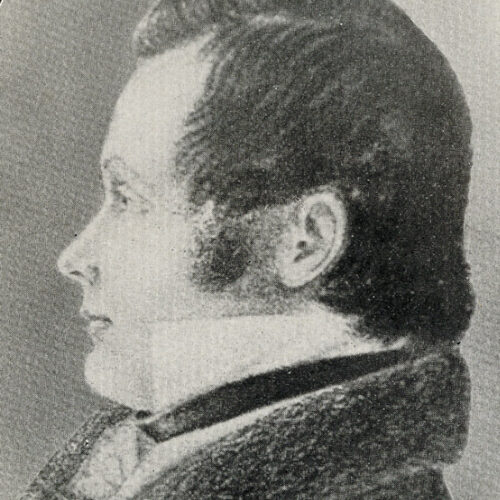
John Scott Horner, a lawyer, politician and land speculator, was considered “the first citizen of the village,” according to “Ripon College a History.”
He was born Dec. 5, 1802, in Warrenton, Fauquier County, Virginia. He was a graduate of Washington (now Washington and Jefferson) College in western Pennsylvania in 1819 and became an attorney. A Democrat, he was appointed by President Andrew Jackson as secretary and the last territorial governor of Michigan in 1835.
Subsequently, he also served as secretary of the newly formed territory of Wisconsin from 1836-1837, with offices in Mineral Point, then was transferred to become register of the Green Bay Land Office from 1837-1846.
In late 1838, he became the first purchaser of land west of Fond du Lac including an area that straddled Silver Creek water power section and land on the south shore of Green Lake. In 1846, he moved to his farm, Westwood, on the south shore of Green Lake and served as probate judge of Marquette and Green Lake counties for many years.
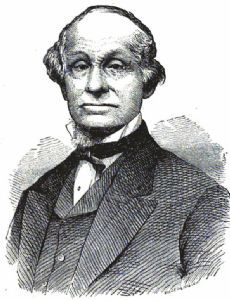 A collaboration with David Mapes in 1849 led to the development of some of his holdings into the community of Ripon and the future Ripon College. Horner named the community after his family’s ancestral home in Ripon, England; and many major streets, including Watson Street after his wife, Harriet Love Watson Horner, and Blackburn, Jefferson, Cass, Houston, Washington, Hennie, Spaulding and Doty after friends and relatives.
In November 1850, Horner chaired the meeting that formed the Lyceum of Ripon and was named one of the first nine directors.
His retirement years were spent at his town home at 336 Scott St. It was built about 1850 and is listed on both the National and State Register of Historic Places.
Horner died Feb. 3, 1883, at the age of 80.